Is Tap Water Safe to Drink in Sydney?
Yes, Sydney tap water is safe to drink and is among the most closely monitored supplies in Australia. Here is what the testing actually shows, and the few cases where you might filter.
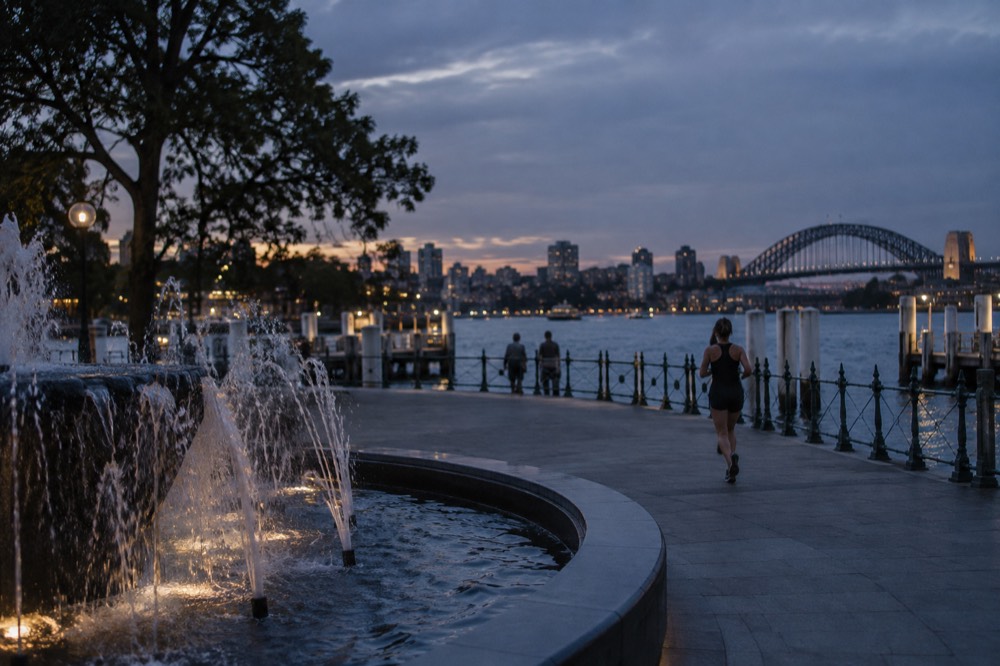
Is tap water safe to drink in Sydney?
Yes, completely. Sydney's tap water is treated, disinfected and tested continuously against the Australian Drinking Water Guidelines, and Sydney Water publishes its results publicly. You can drink from taps, public bubblers and hotel bathrooms across the city with no filtering, no boiling and no bottled-water substitute. The only real caveats are taste preference and a handful of very specific situations covered below.
Sydney is one of the easier cities in the world to answer this question about. The supply comes almost entirely from protected catchments west of the city, it is filtered at large treatment plants, and the utility that runs it, Sydney Water, is a NSW government agency subject to independent auditing. This is not a claim from a tourism board; it is a regulated public health system with published test results.
That said, the question deserves more than a one-word answer, because travellers reasonably wonder about older buildings, the taste, plastic bottles and whether the rules differ anywhere in the metropolitan area. This page walks through what the testing actually shows, where the water comes from, and the handful of edge cases worth knowing about. The team at Sydney Travel Guide keeps this page focused on the sourced facts rather than the folklore.
Where Does Sydney's Drinking Water Come From?
Sydney's water is drawn from protected catchments in the Blue Mountains and Southern Highlands, filtered at treatment plants, and piped more than 80 kilometres to the city. The catchments are largely closed to the public, which means the source water arrives cleaner than most rivers used for supply elsewhere in the world. The largest storage, Warragamba Dam, holds roughly four times the volume of Sydney Harbour.
The system is unusual among big cities. Rather than pulling water from a polluted river next to the population, Sydney's storages sit in mostly forested, access-restricted catchment land. Water then passes through filtration plants, most notably the Prospect Water Filtration Plant, which handles the bulk of the city's supply, before travelling through a network of reservoirs and pipes to your tap.
Sydney Water, the public utility, operates the whole chain. It publishes an annual water quality report, and the results are checked against the Australian Drinking Water Guidelines, the national standard administered through the National Health and Medical Research Council. Health authorities, not the water company itself, set the limits the company must meet.
| Question people ask | The short answer |
|---|---|
| Can I drink from the hotel bathroom tap? | Yes, it is the same supply as the kitchen |
| Is the water filtered or just treated? | Filtered at large plants, then disinfected |
| Do locals drink bottled water? | Some do for taste, but most drink tap |
| Is it safe for baby formula? | Yes, per NSW Health guidance |
| Are public bubblers safe? | Yes, they run on the same mains supply |
How Closely Is the Water Actually Tested?
Sydney Water runs physical, chemical and microbial tests continuously across the supply, and the results are audited by NSW Health rather than by the utility alone. Water that fails a test triggers immediate corrective action, and the annual compliance results are published publicly. In practice, Sydney meets the guidelines in the overwhelming majority of samples in a typical year.
The testing regime covers bacteria such as E. coli, disinfection by-products, metals, turbidity and pH, taken at treatment plants and at taps throughout the network. The Australian Drinking Water Guidelines themselves are conservative by world standards, and Sydney's compliance against them is published each year in Sydney Water's water quality report.
This matters for a traveller because it removes the guesswork. In plenty of destinations the honest answer is "locals drink it, visitors sometimes regret it". Here the honest answer is that the water is monitored to a published standard, by an agency that does not grade its own homework.
If you want to read the source material yourself, Sydney Water publishes its water quality data and annual reports online, and NSW Health independently reviews the results. Between the two, the claim "safe to drink" is not a slogan but a monitored, auditable fact.
After all that reassurance about what comes out of the tap, it is worth remembering what the water feeds: the harbour itself. A morning or afternoon on the water is one of the cheapest experiences in the city.
Does Sydney Tap Water Taste Good?
Taste is the one legitimate complaint, and even then it is mild. Sydney's water is moderately hard and chlorinated, so some visitors notice a faint pool-like smell or a slight mineral edge, particularly in older inner-city buildings. Running the tap for a few seconds, or chilling water in a jug, removes almost all of it. The water is safe regardless of how it tastes.
Sydney's supply is softer than Adelaide's or London's but harder than Melbourne's, which is famously soft. Chlorine is added as a disinfectant at low levels, and levels can vary slightly across the network depending on distance from the treatment plant. Some people are simply sensitive to it; others never notice.
Older buildings can add their own character. Pre-war apartment blocks in suburbs like Paddington or Potts Point sometimes have ageing internal plumbing, and while that affects flavour on occasion, it does not affect safety, because the mains supply reaching the building is the same tested water. If a particular tap tastes metallic, run it briefly or use a benchtop jug filter for taste alone.
Should You Buy Bottled Water Instead?
No, and there is a good reason beyond cost. Bottled water in Australia is less regulated than tap water, generates significant plastic waste, and typically costs hundreds of times more per litre than what comes from your hotel tap. A reusable bottle filled from any Sydney tap is the cheaper, safer-for-the-environment and equally safe choice.
A small bottle from a convenience store in the CBD costs a few dollars. The same volume from a tap costs a fraction of a cent. Across a week of sightseeing, that difference compounds quickly, which is worth keeping in mind if you are following our Sydney budget guide.
There is also a public infrastructure angle: Sydney has free drinking fountains, including filtered water-bottle refill stations, installed across the CBD, parks and beaches. You will find them along the Bondi to Coogee coastal walk, in the Royal Botanic Garden and around Circular Quay. Carrying a bottle and refilling it is standard local practice.
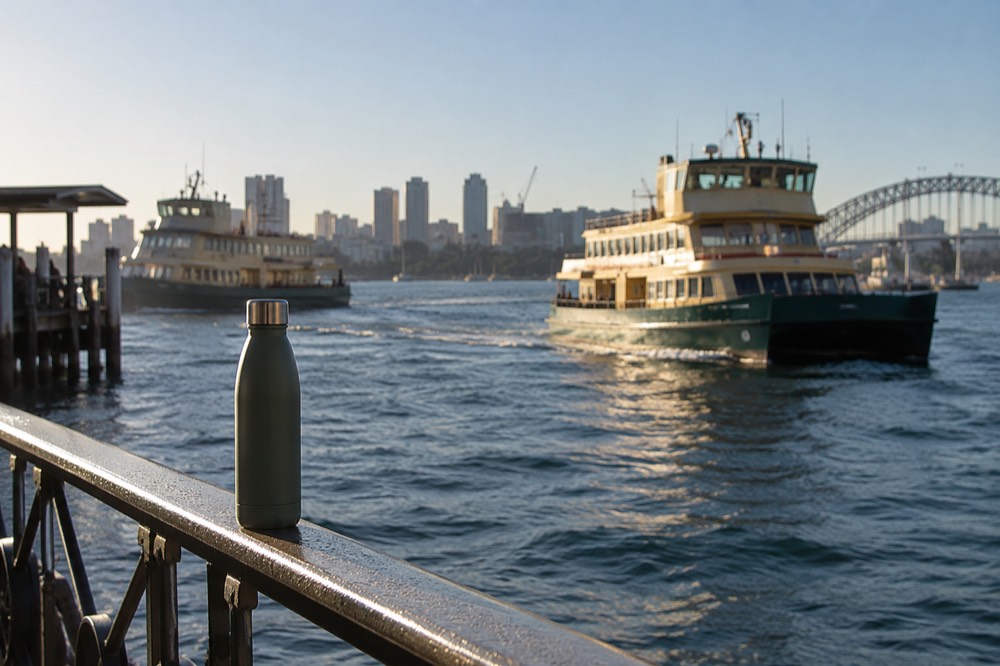
If you are spending a day around the harbour, the refill stations near the wharves make a reusable bottle genuinely more convenient than buying plastic.
Are There Any Situations Where You Should Not Drink It?
There are only a few, and none of them apply to normal taps in the city. Rainwater tanks in rural properties, taps labelled non-potable, and water from boats or old private plumbing you cannot verify are the exceptions. If a sign says the water is not for drinking, believe the sign; otherwise, Sydney's mains supply is safe everywhere from Manly to Campbelltown.
Some holiday [accommodation](https://booking.tpk.ro/ndznHj9h) in surrounding regions, and some rural properties beyond the metropolitan network, run on tank water rather than mains. Tank water is not tested the same way and is genuinely a different proposition. Inside the Sydney Water service area, though, this does not apply.
Cruise passengers should note that ship tap water is the ship's own system, not Sydney's, so the reassurance here covers the city, not the vessel; our Sydney cruise ship day guide covers what to expect ashore. And after heavy storms, Sydney Water occasionally issues precautionary boil-water or do-not-drink notices for specific suburbs if mains pressure is lost; these are rare, localised and loudly publicised, so if you hear nothing, drink freely.
What About Brushing Your Teeth, Ice and Cafe Water?
All of it is fine. The water you brush with, the ice in your cocktail and the free tap water a cafe brings to your table are all the same treated, tested supply. Asking for tap water in a restaurant is normal in Sydney, free, and legally supported under licensing rules. Nobody will look at you strangely.
Ice in Sydney is made from mains water. Cafe jugs are filled from the tap. The only water you need to be selective about in this city is the water you pay for needlessly.
The tap-water habit also connects to the taste of the city in a broader sense. Sydney's brunch and coffee culture runs on the same municipal supply, and the cafes are worth the visit in their own right.
Does Boiling or Filtering Change Anything?
No, neither is needed for safety in Sydney. A filter only helps with taste, and boiling does nothing a healthy adult needs, since the microbial risk the guidelines guard against is already controlled at the treatment plant. Filters and kettles are comfort purchases here, not health measures.
The one group with standing medical advice to be careful anywhere, immunocompromised travellers, should follow their own doctor's guidance rather than a travel article. For everyone else, the treatment chain of filtration plus disinfection does the work.
If you do use a filter jug in a rental, change the cartridge on schedule; an expired filter cartridge can host more bacteria than the clean tap water it is filtering. That is the closest thing to a genuine water-safety trap in Sydney, and it is self-inflicted.
Is Sydney Tap Water Safe Compared to Other Cities?
Yes, and by most international comparisons it ranks near the top. Australian drinking water guidelines are among the strictest in the world, and Sydney's source protection, in closed forested catchments, is a structure many cities cannot replicate. Visitors from most of Europe, North America and East Asia will notice no difference except, possibly, the chlorine.
Melbourne and Sydney both draw from protected catchments and both consistently meet the guidelines; the rivalry between the two cities extends to water, with Melburnians claiming a taste edge. Compared with destinations where visitors are told to stick to sealed bottles, Sydney sits at the opposite end of the spectrum.
For more on how the two cities compare across a whole trip, see our guide to Sydney versus Melbourne, and for what the local standards mean day to day, our overview of Sydney for first-time visitors covers the basics.
Common Questions About Tap Water in Sydney
Is tap water safe to drink in Sydney?
Yes. Sydney's tap water is filtered, disinfected and tested continuously against the Australian Drinking Water Guidelines, with results audited by NSW Health and published annually. It is safe to drink from any mains-connected tap, including hotel bathrooms and public bubblers.
Can you drink tap water in Sydney hotels?
Yes. Hotel taps run on the same municipal supply as every other building in the city, including bathroom taps. There is no need to buy bottled water for drinking or brushing your teeth.
Does Sydney tap water contain fluoride?
Yes, Sydney's water is fluoridated at levels set under NSW Health policy, as is most of Australia's urban supply. This is standard public-health practice and does not affect the safety or taste for visitors.
Why does Sydney tap water sometimes taste like chlorine?
Chlorine is added as a disinfectant, and its residual level varies slightly with distance from the treatment plant. Running the tap for a few seconds, chilling water in a jug or using a taste filter removes it. It is a taste note, not a safety issue.
Is Sydney tap water safe for babies and pregnancy?
Yes. NSW Health considers Sydney's mains water safe for formula preparation and general consumption. If you have a specific medical concern, follow your own doctor's advice, but the water supply itself is not a risk factor.