How Do You Get to the Blue Mountains by Train from Sydney?
The complete guide to catching the train from Sydney to the Blue Mountains: the line, the fares, the caps, and whether you need a tour once you arrive.
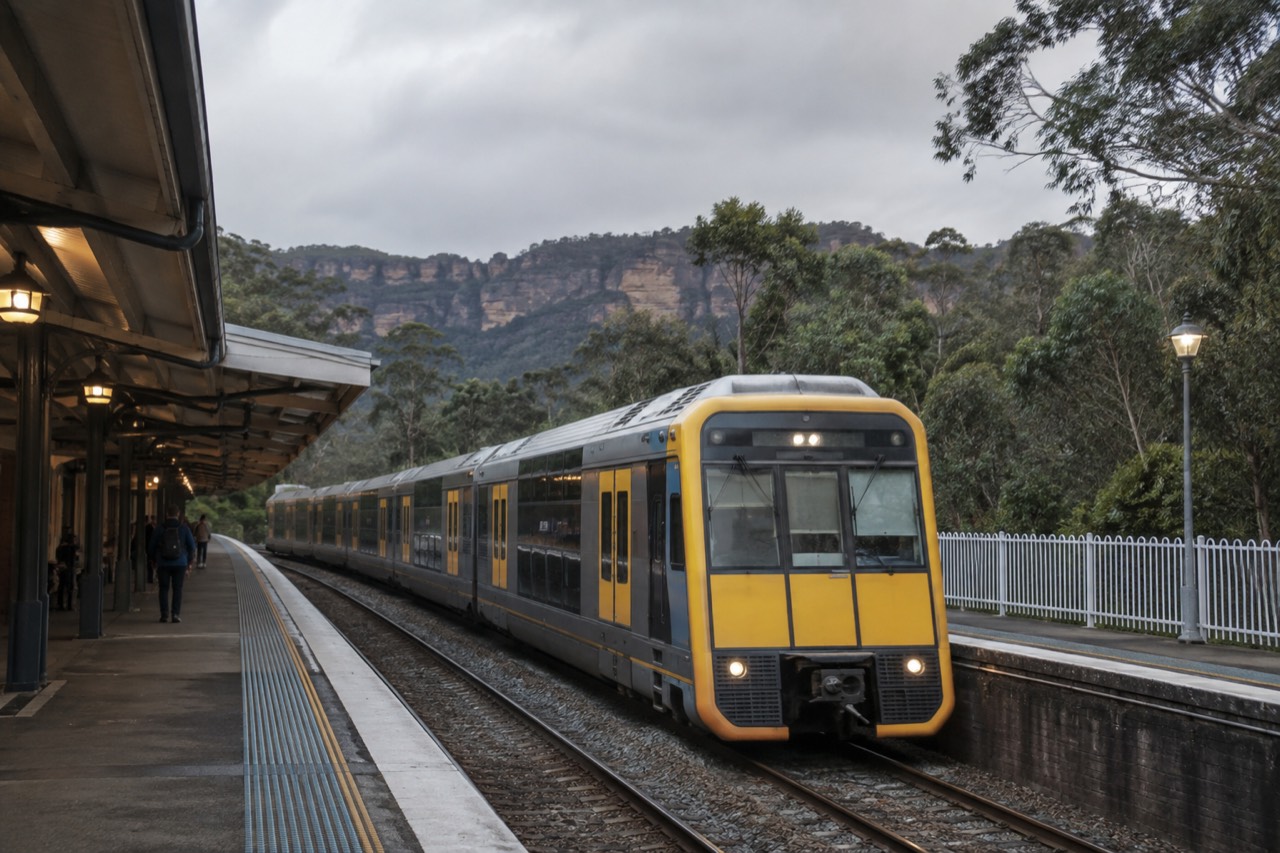
The Blue Mountains sit on a suburban rail line, which is a genuinely unusual thing for a World Heritage sandstone plateau. You do not need a [hire car](https://discovercars.tpk.ro/FvKIyzXW), a tour booking or even a paper ticket. A tap of a contactless card at Central Station puts you on a train that climbs into the escarpment, and the same network that carries commuters to Parramatta carries you to Katoomba. This site, Sydney Travel Guide, keeps the transport details on this page current against the official fare tables, because a surprising amount of Blue Mountains advice online still quotes fares from before the last annual determination.
How Do You Get to the Blue Mountains by Train from Sydney?
Catch a Blue Mountains Line train from Central Station towards Katoomba, and stay on it to the end for the main town. You tap on with an Opal card or a contactless bank card, the same as any Sydney train. The fare falls in the longest distance band, A$10.66 peak or A$7.46 off-peak each way for an adult, and the daily and weekly Opal caps apply. Trains run daily, but weekend trackwork is common, so check the alerts before you leave.
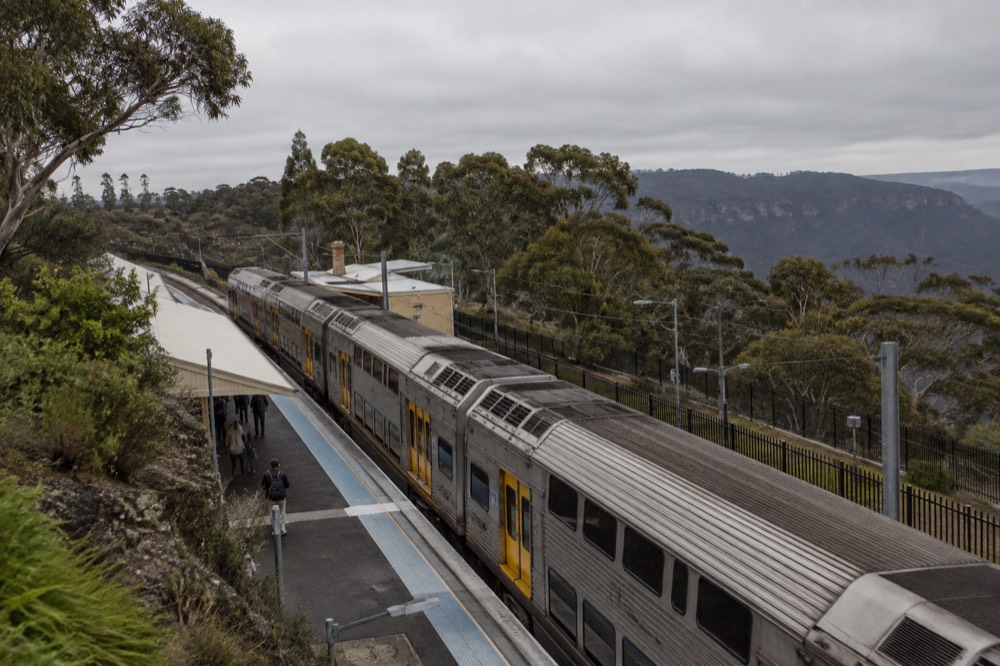
The Blue Mountains Line is a regular Sydney Trains service, not a tourist railway and not a special ticket. That is the whole point and the whole convenience of it. You turn up at Central, you look for the departure screens showing Blue Mountains Line services, and you board. There is no reservation, no seat booking and no separate fare product. The same tap-on rules, the same off-peak discounts and the same caps that apply on a trip to Bondi Junction apply on a trip to the mountains.
Katoomba is the station almost everyone wants. It is the town at the centre of the plateau's visitor economy, the place where the Three Sisters viewpoints, the cliff-top walking tracks and the Scenic World cableway cluster closest together. Leura, one stop earlier, is the quieter alternative if you prefer cafés and galleries over the main drag. Both sit well inside the same fare band, so the choice of station costs you nothing extra.
One practical note worth internalising early: the mountains are colder than Sydney. The Bureau of Meteorology's long-run averages show Sydney's July mean minimum at 8.1 °C, and the plateau sits roughly a thousand metres higher than the coast, so the same July morning up top is meaningfully colder again. Pack a layer even when Circular Quay feels warm.
Which Station and Line Do You Actually Catch?
Central Station is the main departure point, and the service you want is the Blue Mountains Line towards Katoomba. Some peak-hour services start from other city stations, but Central is the safe bet for a visitor. The line runs through the western suburbs and up the escarpment, stopping at Glenbrook, Springwood, Wentworth Falls, Leura and Katoomba among others. You stay on the same train the whole way; there is no transfer unless trackwork intervenes.
The practical enemy of a Blue Mountains train day is weekend trackwork. Sydney's rail network runs maintenance programs on weekends, and the Blue Mountains Line is a frequent subject. When trackwork hits, buses replace trains for part or all of the journey, which stretches a simple ride into a longer, less scenic one. Transport for NSW's alerts page lists every planned closure, and it is the single most valuable pre-departure check you can make, more valuable than any packing list.
Boarding is where visitors most often go wrong, in two directions. First, they assume they need an Opal card bought in advance; they do not, because a contactless Visa, Mastercard or Amex, or a phone wallet, is charged exactly the same as an Adult Opal card and receives every benefit, including the caps and the off-peak discount. Second, they tap on but forget to tap off at the far end, and an untapped-off trip is charged at the maximum default fare. Tap the same card, the same way, at both ends.
If you are staying outside the city centre, the train also connects from other hubs. Services run through stations like Parramatta and Blacktown on their way west, so a traveller staying in Parramatta can board there rather than doubling back into the city. The Parramatta guide on this site covers that side of the journey if it applies to you.
For travellers who would rather not read a timetable at all, the region also works well as a guided day out.
The picks above span the two ways people actually experience the mountains: a fully guided all-inclusive day trip that collects you in Sydney, and the city experiences that fill the days around it. The train remains the cheapest and most flexible option, but a tour removes the trackwork question entirely.
How Much Does the Blue Mountains Train Cost?
An adult single from Sydney to Katoomba is A$10.66 at peak times and A$7.46 off-peak, because the trip falls in the 65-plus-kilometre fare band. The 30% off-peak discount applies on Fridays, weekends, public holidays and outside weekday peak hours, which covers most tourist travel. The daily cap of A$19.30 Monday to Thursday, or A$9.65 Friday to Sunday, applies, so a return trip plus local buses can never exceed the cap.
The fare structure is distance-based, and the Blue Mountains sits at the top of it. Here is the full metro and train band table so you can see where your trip lands:
| Distance | Peak adult fare | Off-peak adult fare |
|---|---|---|
| 0-10 km | $4.33 | $3.03 |
| 10-20 km | $5.38 | $3.76 |
| 20-35 km | $6.20 | $4.34 |
| 35-65 km | $8.28 | $5.79 |
| 65+ km | $10.66 | $7.46 |
Two consequences of that table matter for a mountains day. The off-peak discount is the reason a Saturday return costs noticeably less than a Tuesday one, and public holidays carry the off-peak pricing too. And because the Friday-to-Sunday daily cap sits at A$9.65, a weekend return trip to Katoomba, which would nominally cost two off-peak singles, is capped at less than a single peak fare. A weekend day trip by train is, fare for fare, one of the cheapest big outings available from Sydney. The Opal card guide for visitors covers the caps in full if you are building a longer itinerary.
One caution the fare table cannot show: these figures belong to the current NSW fare year. Fares are reset by an annual determination, historically each July, so a guide quoting last year's numbers is quietly wrong. The live tables sit on Transport for NSW's adult fares page, which is where every figure above comes from.
If the timetable is starting to feel like a second job, there is a simpler question worth asking yourself.
Is the Train Enough, or Do You Need a Tour Once You Arrive?
The train gets you to Katoomba comfortably and cheaply, and the town's core sights, the Three Sisters viewpoints, the cliff walks and Scenic World, are reachable from the station on foot or by local bus. But the plateau's bigger draws, the lookouts further west, the wildlife parks and the valley floor, are scattered across dozens of kilometres of road. A traveller with one day, no car and ambitions beyond Katoomba usually gets more from a guided day trip than from the rail timetable.
Katoomba station sits about a kilometre and a half from the town centre and the edge of the escarpment, and the walk to the Echo Point lookout is a real, walkable one. The Katoomba and Three Sisters guide maps that out station by station, and the Scenic World guide covers the cableway and railway that operate from the same corner. For a walker, the train plus a good pair of shoes is a complete day.
The gap opens up when you want the rest of the plateau. Wentworth Falls and Blackheath add further stops on the same line, each with their own tracks, but connecting them in one day means watching the clock against an hourly-ish service. Featherdale-style wildlife stops, the lookouts along the western escarpment and any itinerary that touches the valley floor realistically need wheels.
That is the honest case for the all-inclusive option. The Blue Mountains All-Inclusive Day Trip runs a small-group format with a local guide, covers the scattered sights the train cannot reach, and handles the trackwork risk on your behalf. For a visitor with a single free day and no desire to study a rail map the night before, it converts a logistics problem into a seat on a bus.
The trade-off is simple: the train costs less and answers to nobody's schedule but yours, while the tour buys reach and local knowledge. Plenty of travellers do both across separate days, and the question "can the Blue Mountains be done in half a day" has its own answer on this site if your time is short.
What Should You Know Before You Go?
Check three things before you leave Sydney: trackwork alerts, park alerts and the weather gap. Weekend trackwork can replace trains with buses, several Blue Mountains tracks and roads have closures running into late 2026, and the plateau runs several degrees colder than the city. Entry to Blue Mountains National Park is free except at Glenbrook, where the vehicle fee is A$8, so arriving by train avoids park fees entirely.
The closure list deserves a real look, not a skim. The Jenolan Karst Conservation Reserve is closed to visitors until the end of December 2026, which removes Jenolan Caves from any realistic itinerary this year, and Mount Hay Road is shut for upgrades until mid-December. Rather than memorising a list that changes, use the live alerts on the National Parks and Wildlife Service site; the entry-fee details, including the Glenbrook charge and the fact that fees are per vehicle rather than per person, sit on the NPWS fee-collecting parks page.
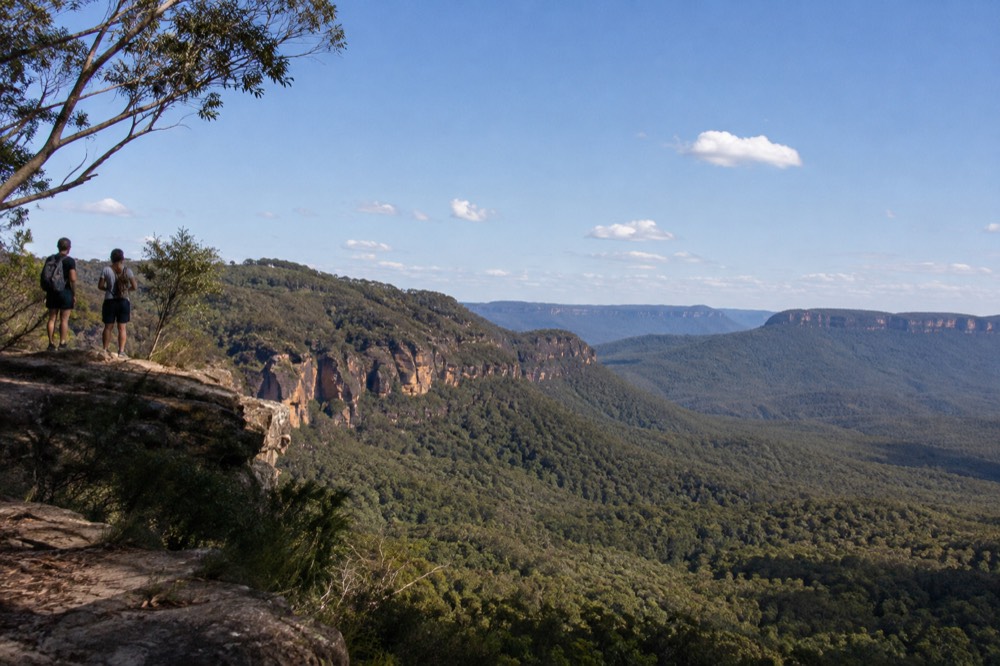
The free-entry fact surprises people. Most visitors assume a World Heritage national park this famous charges at the gate, but the Katoomba, Blackheath and Wentworth Falls areas carry no entry fee at all, and arriving by train means you never touch the one corner that does. It makes the rail option cheaper than it already looks.
Weather is the last piece. The mountains sit high enough that Sydney's forecast is a poor proxy, mist can swallow the Three Sisters view even when the city is clear, and winter mornings up top regularly sit near freezing. The Bureau of Meteorology's Katoomba-area forecasts are the ones to trust, not the coastal ones. If your whole day hinges on a view, build a morning and an afternoon option into the plan rather than betting everything on one lookout.
For the wider picture of how the region fits into a Sydney trip, the Blue Mountains day trip guide compares the train against every other way of getting there, including driving times and the tour options.
Common Questions About Getting to the Blue Mountains by Train
How do you get to the Blue Mountains by train from Sydney?
Catch a Blue Mountains Line train from Central Station towards Katoomba and tap on with an Opal card or a contactless bank card. The adult fare sits in the 65-plus-kilometre band, A$10.66 peak or A$7.46 off-peak each way, and the daily caps apply. Check the trackwork alerts before you travel, especially on weekends.
Which station do you get off at in the Blue Mountains?
Katoomba, for the Three Sisters, Echo Point, the cliff walks and Scenic World. Leura, one stop before, is the quieter village alternative. Both are in the same fare band, so the choice costs nothing extra.
Do you need an Opal card for the Blue Mountains train?
No. A contactless credit, debit or device wallet is charged exactly the same as an Adult Opal card and receives every benefit, including caps and the off-peak discount. Opal single-trip tickets from machines cost more and receive no benefits, so avoid those.
Is the Blue Mountains train covered by the daily cap?
Yes. The caps apply network-wide across metro, train, bus, ferry and light rail, so a return trip to Katoomba plus any local buses cannot exceed A$19.30 Monday to Thursday or A$9.65 Friday to Sunday. The weekly cap of A$50 also applies.
Can you do the Blue Mountains by train in one day?
Yes, and most visitors do. Katoomba's core sights are walkable from the station, and the off-peak fares and weekend cap keep the cost low. Sights beyond Katoomba, such as the western lookouts and wildlife parks, are hard to reach without wheels, which is where guided day trips earn their keep.
Is entry to Blue Mountains National Park free?
Yes, except in the Glenbrook area, where a vehicle fee of A$8 per day applies. Fees are charged per vehicle, so arriving by train or on foot avoids them entirely at almost every entry point.