Which Month Is the Rainiest in Sydney?
June is Sydney's rainiest month by long-term average, wetter than any summer month. Here is the full monthly rainfall picture and how to plan around it.
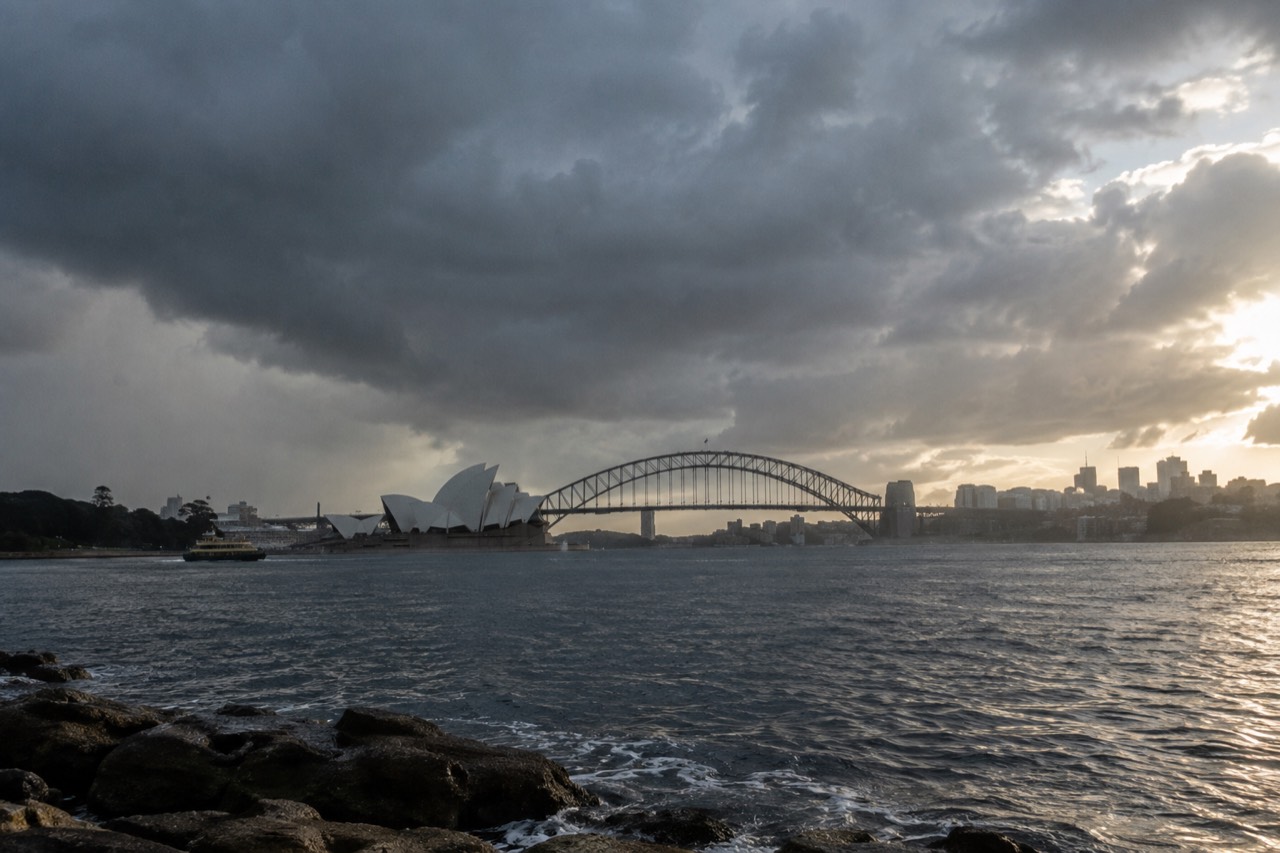
Which Month Is the Rainiest in Sydney?
June is the rainiest month in Sydney. The Bureau of Meteorology's long-term record for the Observatory Hill station, which stretches back to 1858, gives June a mean rainfall of 133.1 mm, the highest of any month and noticeably wetter than the summer months visitors usually worry about. March is second at 131.6 mm and April third at 126.5 mm. June also averages 8.8 rain days with at least 1 mm, so the rain arrives as repeated soaking fronts rather than one dramatic storm.
That answer surprises most visitors, and it is worth sitting with for a moment. Sydney sits on the east coast of Australia, in the subtropics, and the default assumption is that the wet season must be summer. The record says otherwise: rainfall in Sydney peaks in autumn and early winter, and the peak tourist months of December and January sit mid-table at 77.1 mm and 101.2 mm respectively.
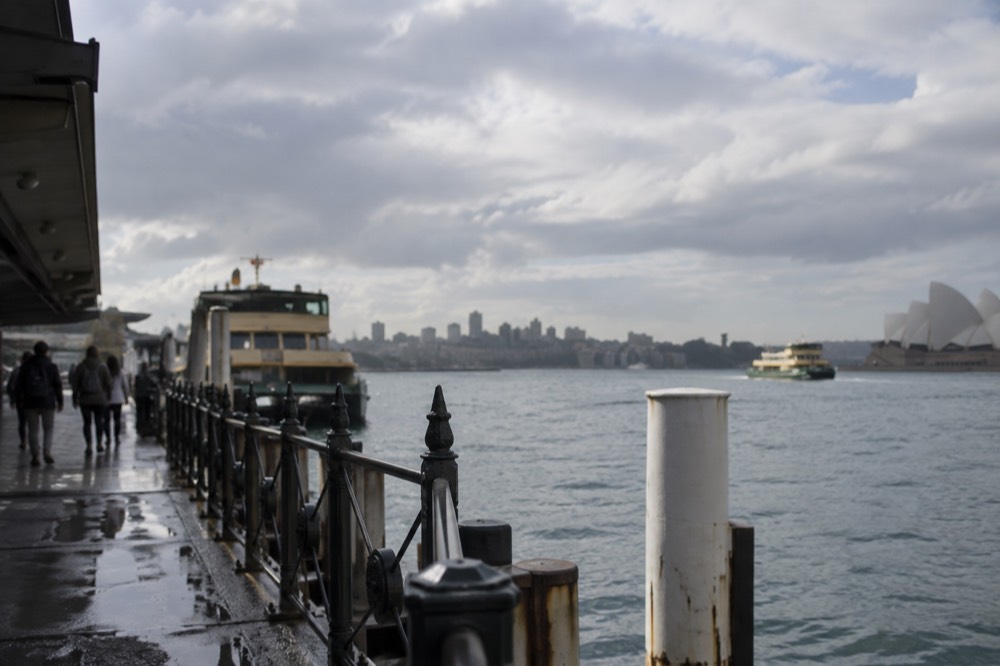
How Much Rain Does Sydney Get, Month by Month?
Sydney averages 1,211.1 mm of rain a year, spread across about 99.5 rain days, and the monthly pattern peaks in June at 133.1 mm. The wettest stretch runs from March through June, when every month averages at least 117.4 mm, while September is the lowest at 68.1 mm. These are long-term averages from a 162-year record at the Observatory Hill station. The wettest stretch runs from March through June, when every month in that window averages at least 117.4 mm, and the driest stretch is late winter and spring, with September the lowest at 68.1 mm. These are long-term averages drawn from a 162-year record at the Observatory Hill station, not a forecast for your specific week, so treat them as a planning baseline rather than a promise about any single visit.
Here is the full monthly picture from the Bureau of Meteorology's published climate averages for Sydney:
| Month | Mean rainfall (mm) | Rain days (≥1 mm) | Mean daily max (°C) |
|---|---|---|---|
| January | 101.2 | 8.6 | 26.0 |
| February | 119.3 | 9.0 | 25.8 |
| March | 131.6 | 9.9 | 24.8 |
| April | 126.5 | 8.9 | 22.5 |
| May | 117.4 | 8.6 | 19.5 |
| June | 133.1 | 8.8 | 17.0 |
| July | 96.3 | 7.4 | 16.4 |
| August | 80.2 | 7.1 | 17.9 |
| September | 68.1 | 7.1 | 20.1 |
| October | 76.7 | 7.9 | 22.2 |
| November | 83.8 | 8.3 | 23.7 |
| December | 77.1 | 7.9 | 25.3 |
Two things jump out of that table. First, the top four months for rainfall are March, April, June and May, in that order, which means the entire wettest quarter of Sydney's year falls outside the December-to-February window that most international visitors book. Second, February is the only summer month that comes close to June's total, and even it sits 14 mm short.
The monthly pattern matters for how the rain actually feels, too. June rain tends to come in steady frontal bands off the Tasman Sea, lasting hours rather than minutes. Summer rain, when it arrives, is more often convective: short, heavy afternoon bursts that clear as fast as they built. A June visit is more likely to give you a genuinely grey day; a January visit is more likely to give you a soaked hour and then sunshine.
If you are planning a trip and want the deeper version of this, our Sydney weather month by month guide breaks each month's temperatures, rain and daylight into a full planning page.
Does Rain in Sydney Ruin a Trip?
No, rain rarely ruins a Sydney trip. The city's core experiences are either indoor or weather-tolerant, and even the wettest month averages only 8.8 rain days. A wet day still works for the Opera House tours, the Australian Museum, the Art Gallery of New South Wales and ferry rides. Plan two or three indoor anchors, and stay out of the water after heavy rain. A wet day still works for the Opera House tours, the Australian Museum, the Art Gallery of New South Wales, ferry rides across the harbour and most of The Rocks. What rain does close off is the beach-and-coastal-walk programme: swimming is genuinely inadvisable after heavy rain, and exposed cliff paths lose their appeal fast. Plan two or three indoor anchors and the wettest day stops being a lost day.
The swimming point deserves emphasis because it is the one with a real safety edge. NSW Government's Beachwatch program advises staying out of the water while it is raining and for up to one day after heavy rain at ocean beaches, and for up to three days after heavy rain at harbour and estuarine swim sites, because stormwater runoff degrades water quality. The Beachwatch site publishes daily grades for every monitored swim spot, so a rainy-week visit does not mean guessing.
There is a second, quieter consequence of rain that photographers and walkers should know: the coastal walks are not dangerous in the way surf is, but they are exposed, and June fronts can sweep through with real wind. If a wet forecast lands on your planned Bondi to Coogee coastal walk day, swap it for a harbour-side day and come back to the coast when the sky clears.
The single best rainy-day structure in Sydney, in this desk's view, is the ferry-plus-indoor-attraction combination. The zoo-and-ferry package is the strongest example: the crossing to Taronga stays scenic in overcast weather, the zoo itself has plenty of sheltered exhibits, and the return ferry gives you a second pass across the harbour when the light may have improved. Taronga's own gate pricing runs $57 for adults with online tickets from $51.30, and the bundled ferry-and-entry product sits on the operator's live listing.
What Is the Driest Month in Sydney?
September is the driest month in Sydney, averaging 68.1 mm of rain across just 7.1 rain days, with August close behind at 80.2 mm. The two months together make late winter and early spring the statistically safest window for outdoor plans, and August also has the most clear days of any month on the record, 13.4 on average. The two months together make late winter and early spring the statistically safest window for outdoor plans. August also has the most clear days of any month on the record, 13.4 on average, while February has the fewest at 5.3. Sydney's clearest skies arrive in late winter, and its cloudiest arrive in the middle of peak season, which is the single most counterintuitive fact in the city's climate record.
That last figure is the one worth repeating, because it runs against every instinct a northern-hemisphere visitor brings. February, the height of the Sydney summer and one of the busiest months on the harbour, is statistically the cloudiest month of the year. June has fewer daily sunshine hours than any other month, 5.5, because the days are short, yet it records more clear days than January does. The winter sky is often cleaner than the summer sky; there are simply fewer hours of it.
For travellers weighing the trade-off, spring offers the best of both: September's rainfall is the lowest on the table, mean daily maxima are back up to 20.1 °C, and daylight saving from early October stretches the evenings. Our best time to visit Sydney guide works through the full seasonal comparison.
How Should You Plan Around Sydney's Rain?
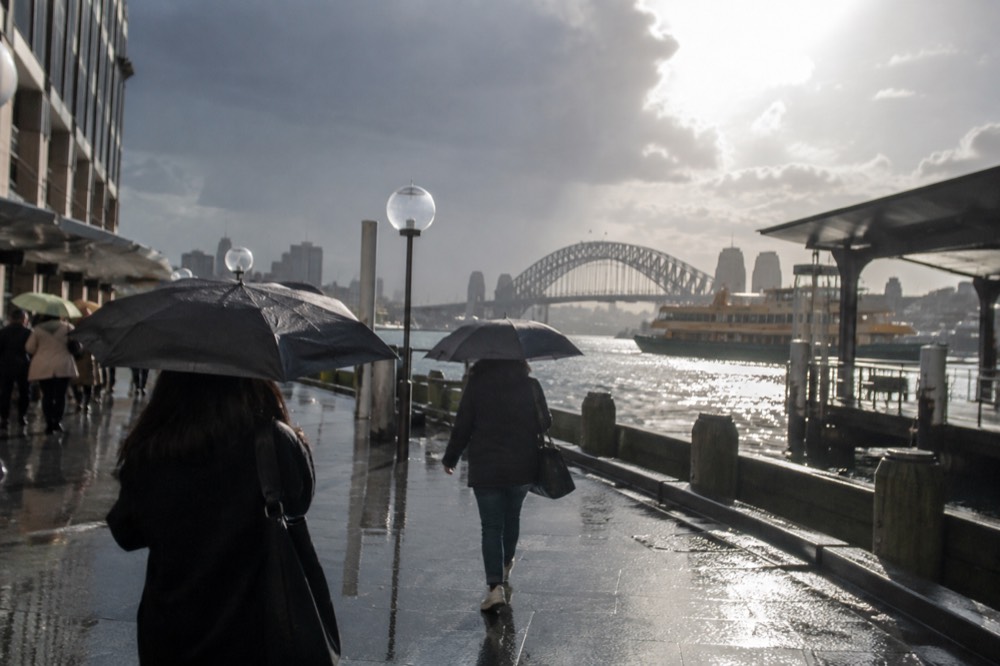
Plan around Sydney's rain by scheduling indoor anchors in June and March, keeping coastal days flexible, and never treating a rain forecast as a cancellation. Pack a light rain layer year-round, book outdoor-dependent tickets for the clearer parts of your stay, and hold a wet-day plan you genuinely like, since most days stay at least partly dry in every season. The averages tell you which weeks carry the most risk, but the difference between the wettest month, June at 133.1 mm, and the driest, September at 68.1 mm, is about 65 mm spread across a whole month, which still leaves most days at least partly dry in every season. Pack a light rain layer year-round, book the outdoor-dependent tickets for the clearer parts of your stay, and hold a wet-day plan you genuinely like.
A practical split looks like this:
| If it rains on your trip | Good swaps | Avoid |
|---|---|---|
| Harbour day | Ferry to Taronga, zoo exhibits | Kayaking, jet boat rides |
| Museum day | Australian Museum, Art Gallery of NSW, MCA | Coastal cliff paths |
| Walk day | The Rocks, Queen Victoria Building, covered arcades | Bondi to Coogee walk |
| View day | Sydney Tower Eye observation deck | BridgeClimb in heavy rain |
| Swim day | Wait 1 day at beaches, 3 at harbour sites, check Beachwatch | Swimming during or straight after rain |
The observation deck earns its place on that list honestly: it is the one Sydney view that does not care about the weather at all, since you are looking at the sky from inside it, and on a broken-cloud day a partly covered harbour can photograph better than a flat blue one. The four-attraction combo pass also lets you shuffle SEA LIFE, the Tower Eye and the other included venues across whatever the week delivers, which is exactly the flexibility a rainy stretch rewards.
One more planning note that saves real money: public holidays in NSW carry the cheaper weekend Opal fare cap, and off-peak fares are discounted 30 percent on Fridays, weekends and outside peak times, so a rainy public holiday is the cheapest day to ride ferries and trains even if the view from them is grey. This Sydney Travel Guide desk keeps the fare details current on the Opal card guide for visitors.
The Rain Facts Most Guides Get Wrong
Most generic guides flatten Sydney's rainfall into sunny year-round or wet in winter slogans and lose the numbers that actually change a plan. The 162-year record says June is the wettest month by total, yet March has the most rain days, August is the clearest and February the cloudiest, distinctions that decide which month you book and what you pack. The record is more interesting than either slogan: the wettest month is June, the clearest is August, the cloudiest is February, and the most rain days belong to March, not June. Those distinctions decide which month you book, what you pack and which day you give the coast versus the harbour, so they are worth having exactly right rather than roughly right.
Sydney's rainfall story is full of counterintuitive details, and this desk keeps them sourced rather than assumed. Here are the specifics that actually change a plan.
The distinction between June and March in that list is the subtle one. June gets the biggest total because its fronts are heavier; March gets the most rain days because its falls are lighter and more frequent. If you hate carrying an umbrella, March is the worse month. If you hate losing a whole day to weather, June is the one that can do it.
Common Questions About Rain in Sydney
Which month is the rainiest in Sydney?
June. The Bureau of Meteorology's long-term record for Sydney's Observatory Hill station gives June a mean rainfall of 133.1 mm, the highest of any month. March is second at 131.6 mm and April third at 126.5 mm. No summer month comes close to June's total.
Is Sydney's rainy season in summer?
No. Sydney's rainfall peaks in autumn and early winter, not summer. The four wettest months on the long-term record are March, April, June and May. Summer brings short, heavy afternoon storms, but the sustained soaking rain belongs to the March-to-June stretch.
What is the driest month in Sydney?
September, which averages 68.1 mm of rain across 7.1 rain days. August is next at 80.2 mm. Late winter and early spring are the statistically driest and clearest parts of Sydney's year, with August recording the most clear days of any month.
Does it rain all day in Sydney when it rains?
Usually not, especially outside June and July. Summer rain tends to arrive as brief, heavy bursts that clear within hours. Autumn and early-winter rain is more frontal and can last a full day or several. Even in the wettest months, most days stay at least partly dry.
Can you swim in Sydney after rain?
Wait. The NSW Government's Beachwatch program advises staying out of the water while it is raining and for up to one day after heavy rain at ocean beaches, and for up to three days after heavy rain at harbour and estuarine swim sites, because stormwater runoff degrades water quality. Check the daily Beachwatch grades before swimming.
Is June a bad month to visit Sydney?
Not necessarily. June is the wettest month, but mean daily maxima are still 17.0 °C, crowds are thin, and the city's indoor programme, ferries and harbour views all keep working in overcast weather. Whale watching also runs from May to November, so a June visit falls inside the season.