What Are the Most Beautiful Walks in Sydney?
The most beautiful walks in Sydney, from the Bondi to Coogee coastal track to harbour-side paths and Blue Mountains bushwalks, with fares, fees and seasonal timing.
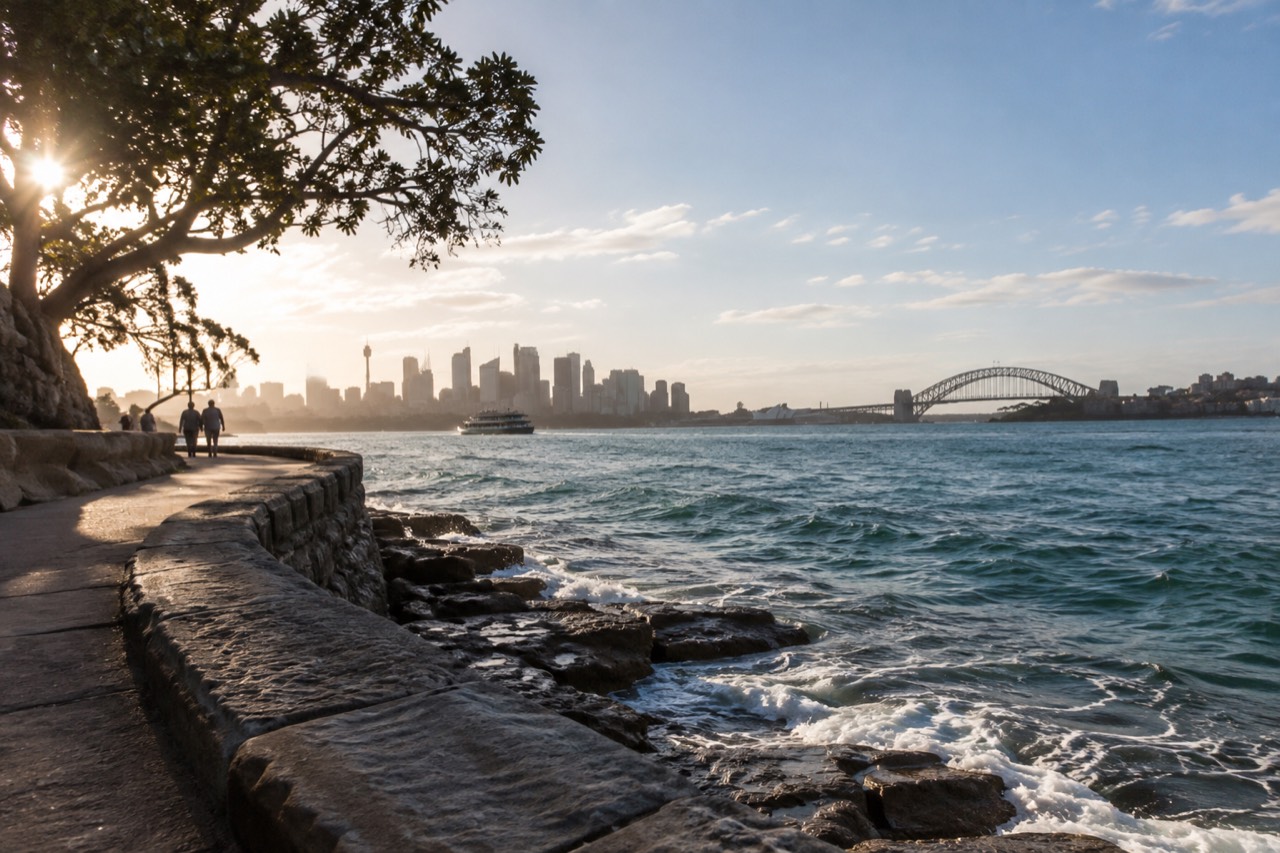
Sydney is a city you understand on foot. The harbour cuts so deep into the place that almost anywhere you stand, water is a short walk away, and the coast keeps going past the last suburb into national park. The result is a set of walks that rank with the best urban walking anywhere: cliffs, sandstone, bush, and a skyline that keeps appearing and disappearing behind headlands.
The question is not whether Sydney has beautiful walks. It is which ones to give your limited days to, and in what season. That choice matters more here than in most cities, because Sydney's weather has a pattern most visitors never hear about, and it rewards people who walk in the months everyone else avoids.
What Are the Most Beautiful Walks in Sydney?
The most beautiful walks in Sydney are the Bondi to Coogee coastal track, the Manly to Shelly Beach path around Cabbage Tree Bay, the harbour-side stretch from the Sydney Opera House through the Royal Botanic Garden to Mrs Macquarie's Chair, and the cliff-top tracks above the Jamison Valley in the Blue Mountains. Each is free to walk. The hardest choice is not finding a beautiful route but choosing between ocean, harbour and bush on the same short trip.
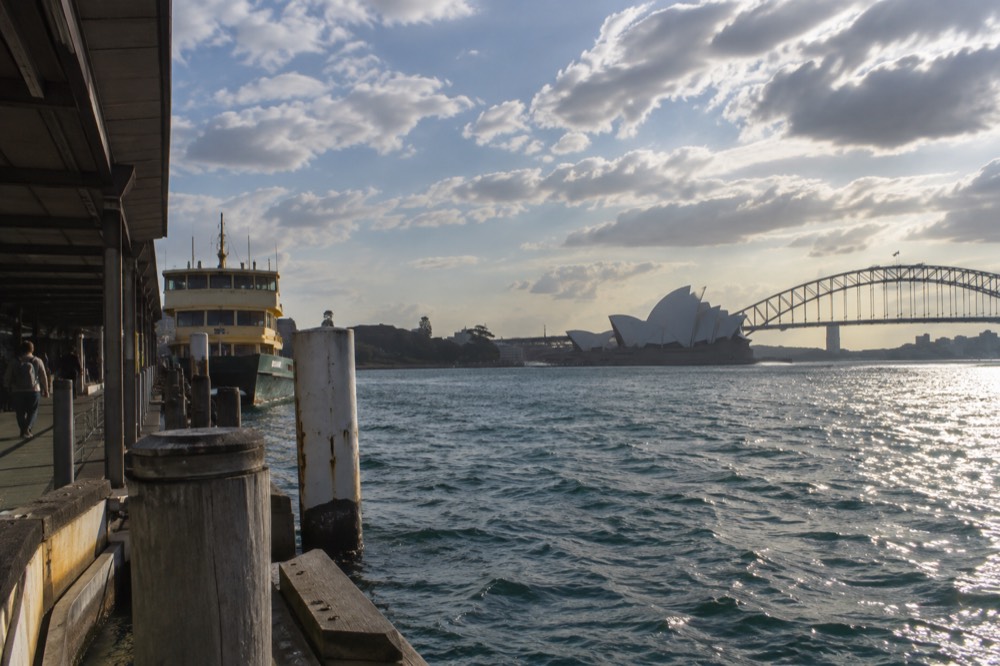
Those four routes are the headliners, but they are starting points rather than a closed list. Around them sit dozens of smaller tracks: the sandstone shelves of the Spit to Manly walk, the historic laneways of The Rocks, the wilder trails of the Royal National Park to the south. A week in Sydney is barely enough to walk the best of it.
What follows is organised by setting, because that is how locals actually decide. Ocean days, harbour days, bush days. Each section tells you what the walk gives you, what it costs, and when to do it.
Which Harbour-side Walks Give You the Best Views?
The classic harbour walk runs from the Sydney Opera House through the Royal Botanic Garden to Mrs Macquarie's Chair, and it is the single most concentrated stretch of scenery in the city: the sails, the Harbour Bridge, the garden's bays, and a sandstone seat carved for a governor's wife. The garden is free to enter and opens at 7am, so you can have the view almost to yourself before the tour groups arrive.
The Royal Botanic Garden Sydney sits on the harbour's finger of land between Circular Quay and Woolloomooloo, and entry is free, a detail that surprises visitors who assume the city's headline garden must be ticketed. The official garden page publishes opening hours and the seasonal sunset closing times, so check it before planning an evening stroll. From Mrs Macquarie's Chair, the Opera House and the bridge sit in one frame, which is why every second wedding photographer in Sydney ends up here.
West of the Quay, The Rocks offers a completely different walk: sandstone lanes, convict-era buildings, and the harbour on one side. It is short, steep in places, and dense with history rather than scenery. If you want that history unpacked rather than guessed at, a guided option makes a real difference, and the trio below covers the best of the walking-tour family.
A longer harbour option is the Spit Bridge to Manly walk, which threads through Sydney Harbour National Park bushland with constant water views and finishes at Manly's ferry wharf, so you can walk one way and ride the ferry back. The Manly ferry is a genuine part of the experience: the full guide to the Manly ferry and its timetables explains the crossing, and the Spit to Manly walking guide covers the track in detail.
Which Coastal Walk Is the Most Beautiful?
The Bondi to Coogee coastal track is widely considered the most beautiful walk in Sydney, and it is free. It strings together six beaches and two ocean pools along sandstone cliffs, with Bondi Icebergs at one end and the calmer waters of Coogee at the other. Swim only at patrolled beaches and between the red and yellow flags; patrol hours vary by beach and season, so check before you plan a swim into the walk.
The track is the walk that makes Sydney's global reputation, and it earns it. Tamarama, in the middle, is a tiny beach wrapped in cliffs; Bronte has its rock pool; Gordon's Bay, south of Clovelly, is a boat ramp and a snorkelling nook that feels miles from a city. The full Bondi to Coogee coastal walk guide covers the route, and the debate about which direction to walk it has its own answer in which end to start from.
Two safety notes worth more than any itinerary. First, rips are the number one hazard on this coast, and the official advice from Beachsafe is unambiguous: swim between the red and yellow flags at a patrolled beach, and if caught in a rip, stay calm, raise an arm and call for help, float with the current, or swim parallel to the beach toward breaking waves. Surf Life Saving Australia's National Coastal Safety Report 2025 recorded 154 coastal drowning deaths nationally, every one of them outside the flags, outside patrol times, or at an unpatrolled location. Second, stay out of the water while it rains and for up to a day after heavy rain at ocean beaches, and for up to three days at harbour swim sites, per the NSW Beachwatch program's official advice.
Ocean pools are the safer alternative on days when the surf looks doubtful. Bronte Ocean Pool and the North Bondi Children's Pool are free and council-maintained; Bondi Icebergs is a separate club-managed 50-metre pool and charges for access. All ocean pools can close in big swell.
Across the harbour, Manly's walk is the quiet rival: the path from Manly Beach around Cabbage Tree Bay to Shelly Beach is short, flat, and sheltered, passing through a marine reserve where the water is clearer than anything on the ocean side. The Shelly Beach guide covers it, and it pairs perfectly with the ferry ride over.
Which Bushwalks Near Sydney Are Worth the Trip?
The Blue Mountains west of Sydney hold the region's most beautiful bushwalks, especially the cliff-top tracks around Katoomba overlooking the Jamison Valley and the Three Sisters. Entry to Blue Mountains National Park costs nothing except in the Glenbrook area, where a vehicle pass is $8 per day, so a walking day there is close to free. Train access from Central makes it doable without a car.
This is the fact most visitors get wrong: they assume a Blue Mountains day trip carries a park entry fee, and it does not, unless you drive into Glenbrook. The National Parks fee page lists every collecting park in the state, and Katoomba, Blackheath and Wentworth Falls are all free to enter on foot. The Blue Mountains day trip guide covers the train options, and the Katoomba and Three Sisters guide covers the walks themselves.
South of the city, the Royal National Park offers the wildest walking within reach of a train line, from the Bungoona Track above the Hacking River to the famous multi-day Coast Track. Vehicle entry there is $12 per day, but arriving on foot or by train avoids the fee entirely, a pattern that holds at almost every Sydney park. The Royal National Park guide covers access and the best short walks.
If you would rather have the mountains interpreted than merely seen, the guided day trip in the card below is the strongest option on the roster, and it pairs a local guide with the Scenic World rides and Featherdale wildlife on the way home. Everything else covered here is indexed on Sydney Travel Guide.
For walkers who want the city itself explained, The Rocks Guided Walking Tour is the natural pairing: an hour and a half through Sydney's oldest streets with a guide who can put names to the sandstone. Book it for your first morning, and the rest of the city's walks will make more sense.
When Is the Best Time of Year to Walk in Sydney?
August is the best-kept walking secret in Sydney: it has the most clear days of any month, averaging 13.4, against just 5.3 in February. June is the city's wettest month, averaging 133.1 mm of rain, wetter than any summer month. Peak tourist season is statistically the cloudiest time of year, so walkers who come in late winter get the clearest skies and the emptiest tracks.
This is the single most useful thing a walking guide can tell you, and almost none of them do. The Bureau of Meteorology's long-term normals for Sydney, drawn from a 162-year record at Observatory Hill, show that Sydney's rainfall peaks in autumn and early winter, not summer, and that its clearest skies arrive in late winter. February, the middle of peak season, is the cloudiest month on the books.
Summer, meaning December through February in this hemisphere, brings extreme UV. Protection is advised whenever the UV index reaches 3 or above, and Sydney exceeds that threshold for most of the year, hitting extreme levels in summer. Winter walking, by contrast, needs a layer for mornings that average 8.1 °C in July but reward you with those clear skies.
What Will the Transport Cost to Reach These Walks?
A contactless card or Opal card covers every walk in this article, with a daily cap of $19.30 Monday to Thursday and $9.65 on Fridays, weekends and public holidays. The ferry to Manly costs $9.20 one way in the 9 km-plus band, and the train to the Blue Mountains falls in the $8.28 peak or $5.79 off-peak band for a 35-65 km trip. Public holidays are the cheapest days to travel widely because of the lower cap.
| Walk | Getting there | Fare that applies |
|---|---|---|
| Bondi to Coogee | Train to Bondi Junction, then bus | Bus fare band, from $3.30 peak |
| Opera House to Mrs Macquarie's Chair | Walk from Circular Quay or Martin Place stations | Train fare band, from $4.33 peak |
| Manly to Shelly Beach | Ferry F1 from Circular Quay | $9.20 one way, 9 km-plus ferry band |
| Spit to Manly | Bus to Spit Junction, ferry back from Manly | Bus fare plus $9.20 ferry |
| Blue Mountains walks | Train from Central to Katoomba | $8.28 peak / $5.79 off-peak band |
| Royal National Park | Train to Cronulla, then ferry to Bundeena | Train fare plus ferry |
Two traps worth knowing. The privately operated Manly Fast Ferry accepts Opal cards but charges different fares, and Opal caps and transfer discounts do not apply on it, so check you are boarding the public F1 ferry if the cap matters to you. And the airport station access fee sits outside the daily and weekly caps entirely, charged on top of the train fare at both airport stations, so factor that in on arrival day.
For a full breakdown of fares, caps and the contactless-versus-Opal question, read the Opal card guide for visitors and the companion piece on whether tourists need an Opal card at all.
How Do You Choose Between All These Walks?
Match the walk to the day, not the itinerary. Ocean tracks like Bondi to Coogee want clear skies and morning light; harbour walks like the Opera House to Mrs Macquarie's Chair stretch work at any hour and are at their best at sunset; bushwalks in the Blue Mountains want a cool morning and a start early enough to finish before the afternoon. If rain threatens, The Rocks and the QVB arc are the walks that survive it.
A sample split for a four-day visit: one morning for Bondi to Coogee, one ferry-and-walk day for Manly and Shelly Beach, one harbour day combining the Botanic Garden with a guided Rocks walk, and one Blue Mountains day by train. That is the shape most first-time visitors settle into, and it works because each day has one dominant setting rather than three competing ones.
For a deeper look at any single route, the site's full Sydney coastal walks roundup ranks the ocean options, and the cycling guide covers the two-wheeled alternative if your knees vote against the cliffs. Whatever you choose, plan around the climate record rather than the calendar: the clearest walking skies in Sydney belong to the months most people assume are grey.
Common Questions About Beautiful Walks in Sydney
What are the most beautiful walks in Sydney?
The Bondi to Coogee coastal track, the Manly to Shelly Beach path around Cabbage Tree Bay, the Opera House to Mrs Macquarie's Chair harbour stretch, and the cliff-top walks above the Jamison Valley in the Blue Mountains. All four are free to walk, and each shows a different side of the city: ocean cliffs, sheltered bays, harbour icons and sandstone bush.
Is the Bondi to Coogee walk free?
Yes, the walk is entirely free and on public land. The only costs are transport to the start and anything you buy along the way. A guided version is not sold as a standard product; the walk itself is the attraction, and you can start from either end depending on whether you want the ferry or the train as your way home.
Which Sydney walk is best at sunset?
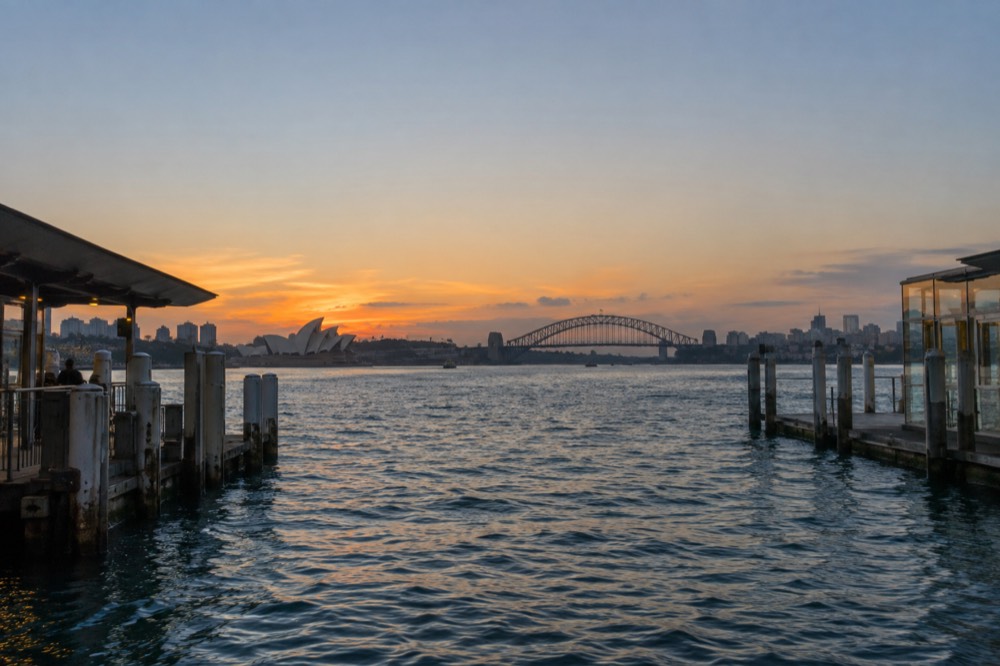
The harbour stretch from the Opera House through the Royal Botanic Garden to Mrs Macquarie's Chair, because it faces west over the water and the bridge. On the ocean side, the cliffs between Bronte and Coogee catch the late light well. In winter, remember the garden closes at sunset, which moves through the year.
Can you walk in the Blue Mountains without a car?
Yes. Trains from Central reach Katoomba directly, and the main lookouts and valley-edge walks are walkable from the station. Entry to Blue Mountains National Park is free except in the Glenbrook area, where a vehicle pass costs $8 per day, so arriving by train avoids even that.
What is the best month for walking in Sydney?
August, on the climate record. It averages 13.4 clear days, the most of any month, against 5.3 in February. June is the wettest month at 133.1 mm on average, so late winter beats both the peak-season crowds and the early-winter rain for reliable walking weather.
Are Sydney's walks safe for solo walkers?
The main routes are popular, well-signed and busy through daylight hours. The real safety issue on coastal tracks is the water, not the path: swim only between the red and yellow flags at patrolled beaches, and remember that patrol hours vary by beach and season. Harbour and bush tracks are safe to walk alone by day.