What Are the 7 Wonders of Australia?
There is no official list, but the seven wonders of Australia most commonly named are Uluru, the Great Barrier Reef, the Sydney Opera House, the Blue Mountains, Kakadu, the Great Ocean Road and the Twelve Apostles.
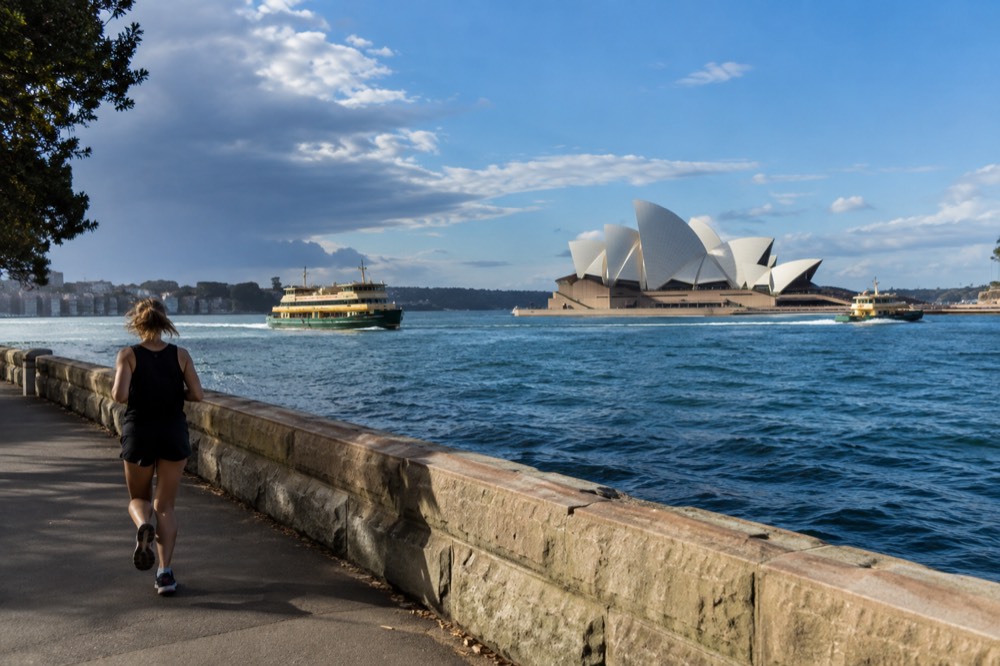
What Are the 7 Wonders of Australia?
Australia has never published an official list of wonders. The seven that get repeated across travel polls, coffee-table books and publisher countdowns are, in the order most lists use: Uluru in the Northern Territory, the Great Barrier Reef in Queensland, the Sydney Opera House, the Blue Mountains in New South Wales, Kakadu National Park in the Northern Territory, the Great Ocean Road in Victoria and the Twelve Apostles. Two of those seven, the Opera House and the Blue Mountains, are in or beside Sydney, which makes this question a genuinely useful one for a Sydney traveller rather than trivia.
What Are the 7 Wonders of Australia?
The seven wonders of Australia, as most commonly listed, are Uluru, the Great Barrier Reef, the Sydney Opera House, the Blue Mountains, Kakadu National Park, the Great Ocean Road and the Twelve Apostles. There is no official government list, so order and membership vary slightly between sources, and some lists swap in the Kimberley or Shark Bay instead of one of the coastal entries. There is no official government list, so order and membership vary slightly between sources, and some lists swap in the Kimberley or Shark Bay instead of one of the coastal entries. What does not vary is that Sydney holds two of the seven: the Opera House on the harbour, and the Blue Mountains about two hours west by train or tour.
The list above is the one that appears most often in Australian travel publishing, and it is worth being honest about its status. Nobody sat in a parliament and declared these seven. They earned their places through repetition, photography and the sheer difficulty of arguing against them. Uluru is a sandstone monolith that rises from the red centre; the Great Barrier Reef is the largest coral reef system on earth; the Opera House is the youngest structure on most versions of the list and the only one you can visit on a lunch break.
The table below sets out the standard seven, where each sits, and what actually earns it the title.
| Wonder | State or territory | Why it makes the list |
|---|---|---|
| Uluru | Northern Territory | A massive sandstone formation in the red centre, sacred to its traditional owners and the country's most recognisable natural landmark |
| Great Barrier Reef | Queensland | The world's largest coral reef system, stretching along the Queensland coast |
| Sydney Opera House | New South Wales | The youngest entry and the only Sydney structure on the list, sitting directly on the harbour |
| The Blue Mountains | New South Wales | Sandstone cliffs, eucalyptus forest and the Three Sisters formation, about two hours west of Sydney |
| Kakadu National Park | Northern Territory | A vast protected area of wetlands, escarpments and rock art |
| Great Ocean Road | Victoria | A coastal driving route built along limestone cliffs southwest of Melbourne |
| Twelve Apostles | Victoria | Limestone stacks rising from the Southern Ocean, the highlight of the Great Ocean Road |
For a Sydney traveller the practical takeaway is simple: you can tick off two of the seven without a domestic flight. The Opera House is in the middle of the city, and the Blue Mountains, including Katoomba and the Three Sisters, are reachable by train from Central Station. Our guide to the Blue Mountains day trip from Sydney covers that route in full, and Katoomba and the Three Sisters covers the formation most lists are really pointing at.
Why Is There No Official List of Australia's Wonders?
Because no Australian government body, tourism authority or heritage agency has ever declared one. The lists you see online come from travel publishers, television countdowns and reader polls, which is why they disagree at the edges. UNESCO's World Heritage list is official, but it includes more than twenty Australian entries rather than seven, and it uses heritage criteria rather than wonder status. The lists you see online come from travel publishers, television countdowns and reader polls, which is why they disagree with each other at the edges. UNESCO does inscribe Australian sites on the World Heritage list, and that list is official, but it includes more than twenty Australian entries rather than seven, and it uses heritage criteria rather than wonder status.
The word "wonder" carries the echo of the seven ancient wonders of the world, of which only the Great Pyramid of Giza survives. Modern countries have borrowed the framing for their own countdowns, and Australia is no exception. The results tend to converge. Uluru, the reef and the Opera House appear on essentially every version, because each is unarguable. The middle of the list is where the arguments live: some polls include the Kimberley in Western Australia, others Shark Bay, others the Pinnacles Desert.
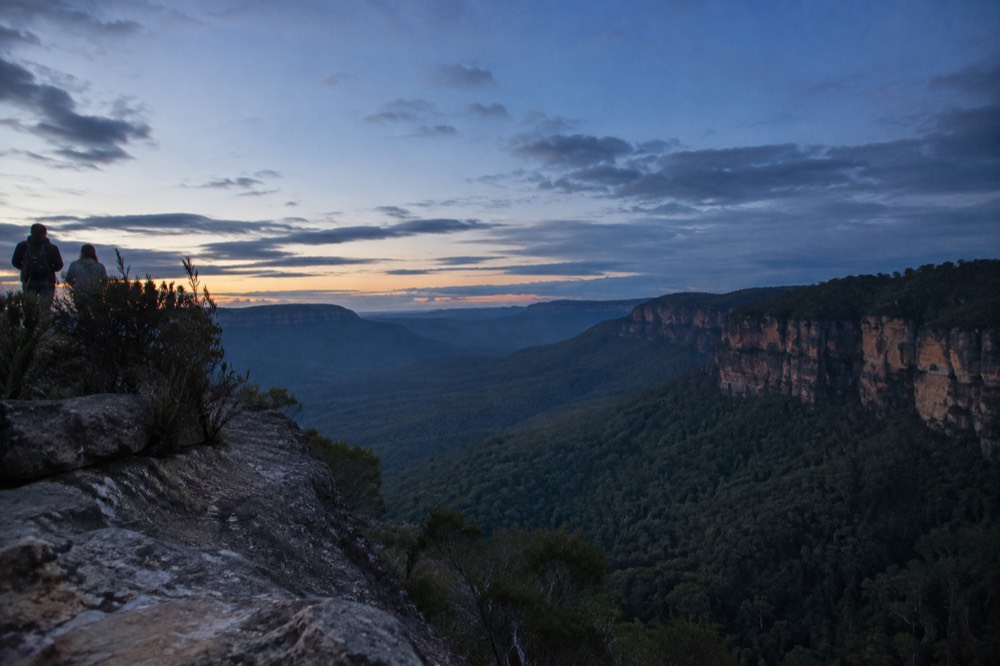
If you want an official anchor instead of a poll, World Heritage listing is the closest thing. The Sydney Opera House, the Blue Mountains, Kakadu, Uluru-Kata Tjuta and the Great Barrier Reef are all inscribed, so the five Australian entries that dominate wonder lists carry genuine heritage status too. That is worth knowing if someone challenges your list over dinner: you can concede the framing is informal while pointing out the underlying sites are formally recognised.
Which of the Seven Wonders Can You See in Sydney?
Two of the seven sit in or beside Sydney: the Sydney Opera House, on the harbor at Circular Quay, and the Blue Mountains, roughly two hours west of the city. You can walk to the Opera House in ten minutes from Circular Quay station, and reach the Blue Mountains by train from Central or by a guided day tour. The Opera House you can walk to in ten minutes from Circular Quay station; the Blue Mountains you can reach by train from Central or by a guided day tour. No other Australian city can put two wonders inside a single day trip, which is a fair claim for Sydney being the best base for this particular bucket list.
Start with the Opera House, because it is the easiest. You can see the building from the outside for free, at any hour, from Circular Quay, from the harbour on a ferry, or from the Royal Botanic Garden Sydney, which frames the sails across the water. Going inside needs either a ticket to a performance or a guided tour; tours run roughly 9am to 5pm daily and last about an hour, though prices vary by date and session because the Opera House does not publish a fixed public tour price.
The harbour itself is the best viewing platform. A sightseeing cruise from Circular Quay puts the Opera House, the Sydney Harbour Bridge and the city skyline in a single slow arc, and it costs less than most harbour experiences. Our full guide to Sydney harbour cruises compares the options, from the cheap morning sightseeing runs to lunch and sunset sailings.
The Blue Mountains half of the pair needs a full day, and it rewards one. The national park entry is free everywhere except the Glenbrook area, where a vehicle pays $8 for the day, so arriving by train or tour costs nothing in park fees. The Three Sisters at Katoomba is the postcard view, and the surrounding valley holds lookouts, waterfalls and walking tracks. Note that parts of the park have track and road closures running through late 2026, including Mount Hay Road and the Blue Pool track, so check the live alerts before you lock in a walk.
What Is the Best Way to See the Sydney Wonders in One Day?
Pair a morning in the Blue Mountains with an afternoon and evening around the harbour, or split them across two days if you want to go inside the Opera House. Doing both wonders properly in one day is tight but possible: an early train or tour to Katoomba, the Three Sisters lookout by mid-morning, a walk in the valley, then back to the city for a harbour cruise at golden hour and the Opera House lit up after dark. Two days is more forgiving.
The one-day squeeze works because the Blue Mountains tours are long but structured. A guided small-group day trip handles the driving, the lookouts and a stop at a wildlife park, and returns to the city in the early evening, which slots neatly into a night walk around Circular Quay. Doing it independently by train is cheaper and equally easy: the line from Central to Katoomba takes under two hours and the station is a short walk from the town centre. Other pages covering the same trip are gathered on Sydney Travel Guide.
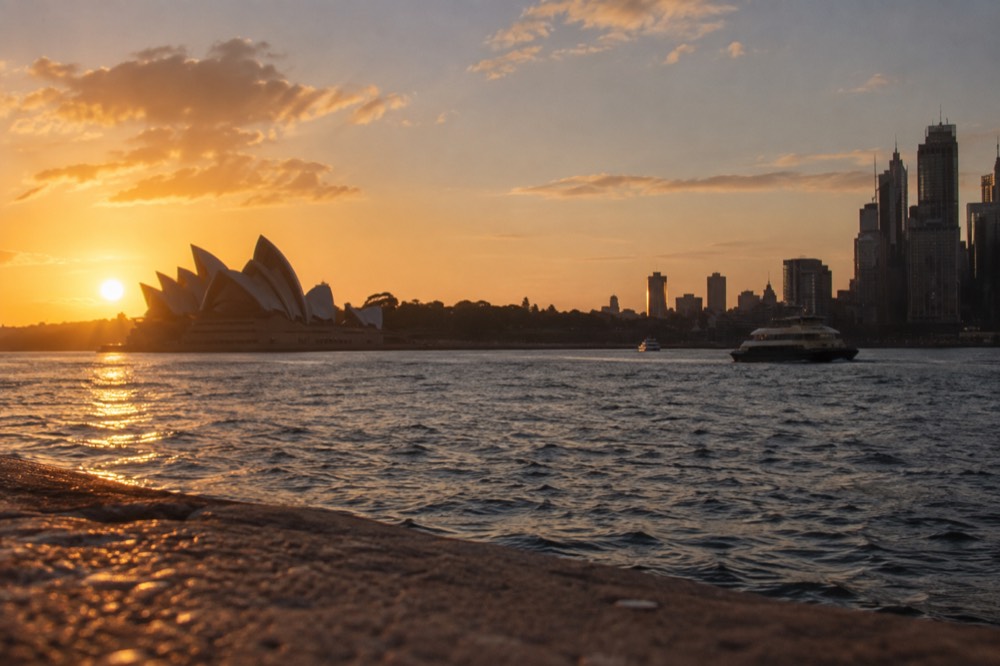
For the city half, height helps. The Sydney Tower Eye observation deck sits above the CBD and gives you the whole harbour basin in one view, which is the fastest way to understand how the Opera House, the bridge and the water fit together before you walk down among them. The deck is open late into the evening in peak periods, and booking ahead is cheaper than buying on the day.
If you would rather understand the city on foot, The Rocks guided walking tour covers the historic quarter between the bridge and Circular Quay, which is the oldest part of Sydney and the best place to hear how a penal colony turned into a harbour city with a wonder on its shoreline.
When Is the Best Time to See the Sydney Wonders?
Autumn and winter give the Blue Mountains their clearest skies, and August is Sydney's clearest month, with 13.4 mean clear days, while February, in the middle of peak season, is the cloudiest at 5.3. For the harbor, almost any month works. The bonus is June through July, when humpback whales pass Sydney on a migration that runs May to November. The counterintuitive part is the winter claim: long-term Bureau of Meteorology records show August is Sydney's clearest month, with 13.4 mean clear days, while February, in the middle of peak season, is the cloudiest at 5.3. Peak tourist season is statistically the greyest time to photograph the harbour.
June is also Sydney's wettest month by total rainfall, 133.1 mm on the long-run average, wetter than any summer month. That does not make winter a bad time to visit; it makes it a month for indoor mornings and clear, sharp afternoons rather than beach days. The Blue Mountains lookouts are at their best in the cooler months, when the haze lifts and the valley reads clean.
Whale watching is the bonus that most visitors never connect to this list. The migration passes Sydney between May and November, and the peak window, late June into July, sits inside the clearest part of the Sydney year. NSW National Parks publishes the migration facts and the land-based vantage points, several of which sit inside Sydney Harbour National Park, so you can watch a 40-tonne animal pass a world heritage wonder from the headland next door.
How Much Does It Cost to See the Seven Wonders?
Two of the seven cost almost nothing to see from the outside: the Opera House is free to view and the Blue Mountains park entry is free except at Glenbrook, while the reef, Kakadu and Uluru each need flights and park passes. The Sydney pair is the budget end of the list, which is another reason the question lands on a Sydney travel site. The table below compares what a visitor actually pays at each wonder, using planning ranges rather than operator promises.
| Wonder | Getting there from Sydney | Entry or viewing cost |
|---|---|---|
| Sydney Opera House | Walk from the CBD | Free from outside; paid tours and performances inside |
| The Blue Mountains | Train from Central, under 2 hours | Park entry free except $8 per vehicle at Glenbrook |
| Great Barrier Reef | Flight to Cairns or Townsville | Reef trips and park charges, varies by operator |
| Uluru | Flight to Ayers Rock or Alice Springs | Park entry pass, per person, multi-day |
| Kakadu | Flight to Darwin, then a drive | Park entry pass, per person |
| Great Ocean Road | Flight to Melbourne, then drive or tour | The road is free; touring costs vary |
| Twelve Apostles | Same route as the Great Ocean Road | The lookout is free |
The Sydney numbers deserve emphasis because they surprise people. The Royal Botanic Garden, which gives you the best free Opera House photo in the city, charges nothing either, so a full day of wonder-viewing in Sydney can cost a train fare and lunch. Inside the Opera House is where the money starts: tour prices are dynamic and set per session, so the live listing is the only honest source for today's figure, and the same applies to the harbour cruises, which range from cheap sightseeing runs to long lunch sailings.
For the Blue Mountains, the all-inclusive guided day trips bundle transport, lookouts and a wildlife park stop into one price, which suits travellers who would rather not read a timetable. Doing it by train is the budget route and, outside the Glenbrook corner of the park, the park itself costs nothing. If you are weighing the two approaches, our guide to day trips from Sydney without a car works through the maths.
Common Questions About the Seven Wonders of Australia
What are the 7 wonders of Australia?
The seven most commonly listed are Uluru, the Great Barrier Reef, the Sydney Opera House, the Blue Mountains, Kakadu National Park, the Great Ocean Road and the Twelve Apostles. There is no official list, so versions vary slightly, but those seven dominate. Sydney holds two of them: the Opera House and the Blue Mountains.
Is the Sydney Opera House one of the seven wonders of Australia?
Yes, it appears on essentially every version of the list, and it is usually the only man-made structure on it. It is also a UNESCO World Heritage site, so its status goes beyond the informal wonder framing. You can see it free from the outside, or take a roughly one-hour guided tour inside.
Are the seven wonders of Australia official?
No. No Australian government body or heritage agency has declared a list of seven. The lists come from travel publishers, polls and television countdowns. The closest official recognition is UNESCO World Heritage listing, which covers more than twenty Australian sites including five of the seven commonly named wonders.
Can you see two of the seven wonders from Sydney in one day?
It is tight but possible: an early train or tour to Katoomba for the Blue Mountains and the Three Sisters, then back to the city for a harbour cruise and the Opera House after dark. Two days is more comfortable and lets you go inside the Opera House rather than only viewing it.
Is the Blue Mountains National Park free to enter?
Yes, except at the Glenbrook area, where vehicles pay $8 for the day. Katoomba, Blackheath, Wentworth Falls and the Three Sisters lookouts cost nothing, and arriving by train avoids vehicle fees entirely at almost every Sydney park.
When is the best month to photograph the Sydney Opera House?
Winter, counterintuitively. August is Sydney's clearest month on the long-run record, averaging 13.4 clear days, while February, in peak summer season, is the cloudiest at 5.3. For whales in the same frame of water, aim for late June through July.