Can I Tap My Credit Card Instead of Opal?
Yes, you can tap a contactless credit card, debit card or phone instead of an Opal card on Sydney trains, metro, buses, ferries and light rail, and you pay the same adult fare with the same caps. Here is how it works and where an Opal card still wins.
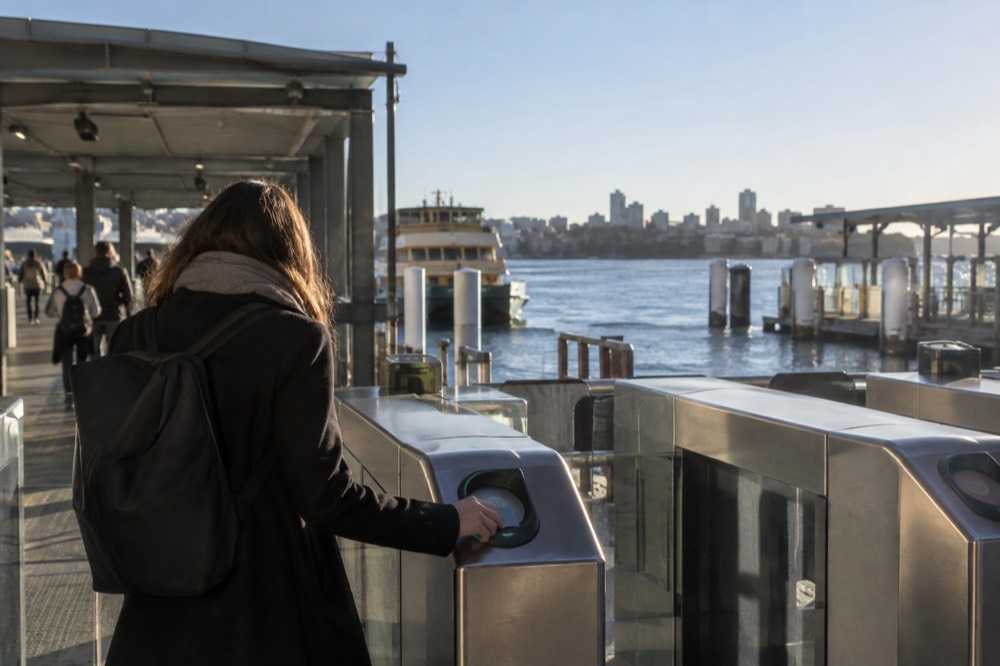
Yes. Sydney's entire public transport network, trains, metro, buses, ferries and light rail, accepts contactless credit cards, debit cards and phone wallets, and Transport for NSW charges a contactless card exactly what an Adult Opal card pays: same fare, same daily and weekly caps, same off-peak discounts and same transfer discount. For most short visits, a card in your pocket is genuinely all you need.
Can I Tap My Credit Card Instead of Opal?
Yes, you can. Every train, metro, bus, ferry and light rail service in Sydney accepts contactless Visa, Mastercard and American Express cards, plus phone and watch wallets, and you are charged the same adult fare an Opal card would pay. You get the same daily caps, the same weekly cap and the same off-peak discounts. For a visitor without a concession, a contactless card is functionally an Opal card you already own.
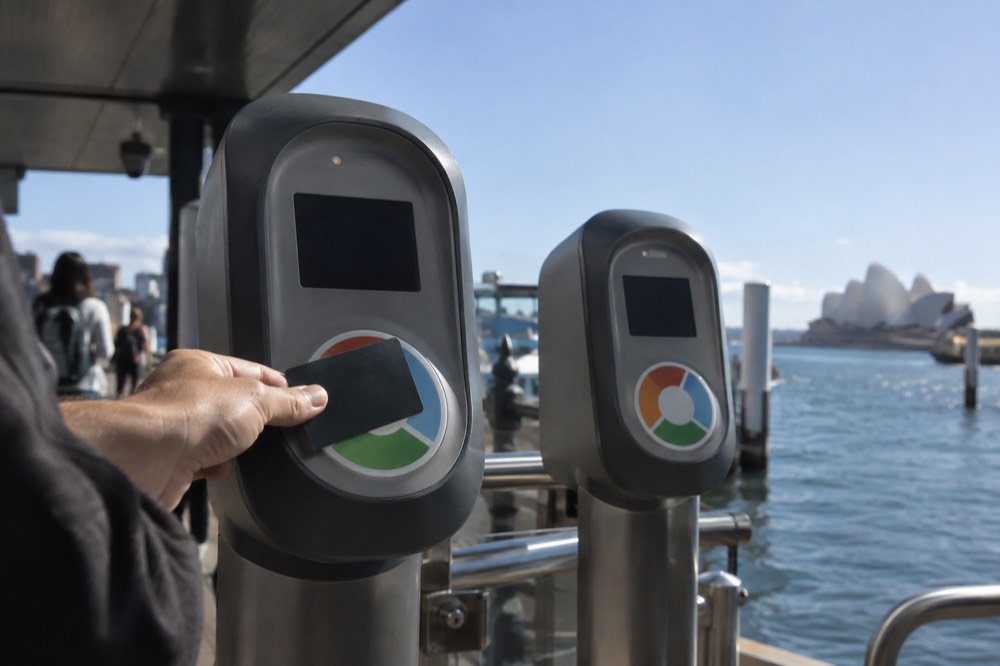
Transport for NSW calls this "contactless payments", and the official fares guidance states it plainly: a contactless card or device is charged the same as an Adult Opal card and receives every benefit, including the caps, the transfer discount and off-peak pricing. There is no tourist premium, no sign-up and no card to buy. You tap on at the start of a trip and tap off at the end, exactly as an Opal user does, on the same grey and yellow readers.
The one thing to keep straight is that contactless always pays the adult rate. If you qualify for a concession, a senior or pensioner rate, or a child fare, contactless cannot carry it. Those fares live on a physical or digital Opal card with the right concession loaded, and there is no way to prove eligibility with a bank card at a reader.
If you are working out how the whole fare system fits together, our Opal card guide for visitors covers the card types, where to buy them and how the caps behave across a full week. The same fare rules are published on Transport for NSW's adult fares page, which is the page every band and cap below is drawn from.
How Does Tapping on and Off Actually Work?
You tap your card on a reader at the start of your trip and tap the same card again at the end, and the fare is calculated from the distance travelled. On trains, metro and ferries you tap at gates or wharf poles; on buses and light rail you tap at the pole inside the vehicle. Always use the same card or device for both taps, because the system matches them as a pair.
The mechanics are identical to Opal, with one trap that catches new arrivals constantly: the card you tap on with is the card you must tap off with. If you tap on with a physical credit card and tap off with the phone in your other hand, the system sees two incomplete trips and charges both of them as default maximum fares. Pick one card, one device or one wallet and stay with it for the whole day.
Tap off, every time. If you forget, you are charged the default fare for that mode, which is the maximum possible for the distance bands, and it is not refunded automatically. On buses and light rail the readers are inside the vehicle near the doors, so the tap-off happens as you leave, not at a gate. On ferries the readers sit at the wharf, so you tap once boarding and once leaving, and the same pairing rule applies on the water as on land.
There is also a small but real advantage to contactless that nobody advertises: no card purchase. An Opal card costs money upfront at a retailer, and if you fly out with A$5 of unspent credit on it, that money is gone. A bank card you already carry has no such residue, which is one of the reasons our cheapest ways to get around Sydney write-up leans toward contactless for short trips.
When Should You Still Carry an Opal Card?
Carry an Opal card if you qualify for a concession, senior, pensioner or child fare, since contactless only ever charges the adult rate. An Opal card is also the safer choice if you are travelling in a group with one payer, or if your bank charges foreign transaction fees on every tap. Everyone else, including most short-stay visitors, can skip the Opal card entirely.
The concession point is the big one. International visitors almost never hold a NSW concession, so for them contactless is equivalent. But families travelling with children should check the child and youth Opal settings before assuming a bank card is fine, because a child tapping a parent's card pays the adult fare every time. The same goes for seniors visiting from interstate or overseas: the pensioner Opal rates are real money, and contactless simply cannot reach them.
The second consideration is your bank, not Sydney. A contactless tap on an Opal reader is a card transaction in Australian dollars, and many overseas cards add a foreign transaction fee of around 2 to 3 percent on each one. Ten taps a day at that rate adds up quickly across a week. If your card charges these fees, a prepaid Opal card loaded once in Australian dollars can work out cheaper despite the upfront cost, a trade-off we break down in is it cheaper to use an Opal or debit card.
For sightseeing, there is a third option that skips the readers altogether. The Sydney and Bondi Big Bus hop-on hop-off tour runs on one ticket rather than per-trip fares, with an optional harbour cruise attached, which suits a day of hopping between Circular Quay, Darling Harbour and Bondi without watching a cap. It is the kind of day where the question of card versus Opal never comes up at all, because the bus is one booking and the cruise is one booking, and neither touches an Opal reader.
One ticket, one day, no fare maths: that is the appeal of a hop-on hop-off bus over a week of taps. If you would rather sort your transport once and spend the rest of the trip on the harbour, it is worth a look before you commit to riding public transport everywhere.
What Does Tapping Actually Cost, and What Are the Caps?
Contactless taps are charged the adult Opal fare by distance band, and the caps apply automatically: A$19.30 a day Monday to Thursday, A$9.65 a day on Friday, Saturday, Sunday and public holidays, and A$50 across a Monday-to-Sunday week. A 30 percent off-peak discount applies on metro, train, bus and light rail on Fridays, weekends, public holidays and outside peak times, but never on ferries.
The distance bands below are the adult fares that both an Opal card and a contactless card pay, as published by Transport for NSW for the 2026 fare year.
| Mode and distance | Peak fare | Off-peak fare |
|---|---|---|
| Metro or train, 0-10 km | A$4.33 | A$3.03 |
| Metro or train, 10-20 km | A$5.38 | A$3.76 |
| Metro or train, 20-35 km | A$6.20 | A$4.34 |
| Bus or light rail, 0-3 km | A$3.30 | A$2.31 |
| Bus or light rail, 3-8 km | A$4.49 | A$3.14 |
| Ferry, 0-9 km | A$7.35 | no off-peak discount |
| Ferry, 9+ km (includes the Manly ferry) | A$9.20 | no off-peak discount |
Two things in that table surprise people. First, ferries get no off-peak discount at all, so a Sunday ferry costs the same as a Tuesday morning one. Second, the weekend daily cap of A$9.65 is less than half the weekday cap, which makes Friday to Sunday the cheapest days to ride widely. The Manly ferry at A$9.20 one way sits just under the weekend cap on its own, so a return Manly trip on a Saturday almost maxes the day for A$9.65 total, then everything else that day is free. Our guide to Sydney ferries goes deeper on which routes earn their fare.
One caveat that matters to ferry riders specifically: the privately operated Manly Fast Ferry accepts an Opal card through OpalPay, but at different fares, and Opal caps and transfer discounts do not apply there. The public F1 Manly ferry is the one that counts toward your caps, a distinction we untangle in the difference between the Manly fast ferry and the regular ferry.
Does Contactless Work at Sydney Airport Stations?
Yes, contactless works at both airport train stations, but the airport station access fee, A$18.61 for an adult, is charged on top of the normal fare and sits outside the daily and weekly caps, with its own separate weekly cap of A$37.75. Your bank card pays exactly what an Opal card pays here too, which is to say both of them pay the access fee.
The access fee is the single most misunderstood charge in Sydney transport. It applies at the Domestic and International airport stations, it is added to the ordinary train fare, and neither the A$19.30 weekday daily cap nor the A$50 weekly cap absorbs it. An adult contactless tap at the airport therefore costs the access fee plus the train fare to your destination, and a family of four feels it four times over.
The cheaper dodge is the 400 bus, which runs from near the airport with no station access fee at all, and which we cover in the cheapest way to get out of Sydney Airport. If you do take the airport train, the fare details live on Transport for NSW's airport access page, which is the authoritative source for the current access fee and its caps.
Common Questions About Tapping Your Card in Sydney
Can I tap my credit card instead of Opal?
Yes. Contactless credit cards, debit cards and phone wallets are accepted on all Sydney trains, metro, buses, ferries and light rail, and they are charged the same adult fare as an Opal card with the same daily caps, weekly cap and off-peak discounts.
Do I need to tap off with contactless?
Yes, always. Tap on at the start and tap off at the end with the same card or device. If you do not tap off, you are charged the default maximum fare for that trip, and it is not refunded automatically.
Can two people use the same contactless card?
No. Each person needs their own card or device, because the system matches a tap-on to a tap-off on the same card. Two riders sharing one card will register as one incomplete trip and one default fare. The same rule applies to Opal cards.
Does contactless give the child or concession fare?
No. Contactless always charges the adult rate. Child, youth, concession, senior and pensioner fares require an Opal card with the correct entitlement loaded, and eligibility is not something a bank card can prove at a reader.
Is contactless charged in Australian dollars?
Yes, every tap is an Australian dollar card transaction. Overseas cards may add a foreign transaction fee of around 2 to 3 percent per tap, so check your bank's rates before relying on contactless for a full week of travel.
What happens if I tap on with my card and tap off with my phone?
The system sees two separate trips with no matching pair, and both are charged as default maximum fares. Pick one card or one device and use it for both the tap-on and the tap-off, every time.
For everything else about getting around the city, from ferries to the metro to walking, the planning pages on Sydney Travel Guide collect the whole picture in one place.