What's the Prettiest City in Australia?
Sydney's harbour setting makes it the prettiest city in Australia for most travellers, and the climate data explains why the scenery delivers.
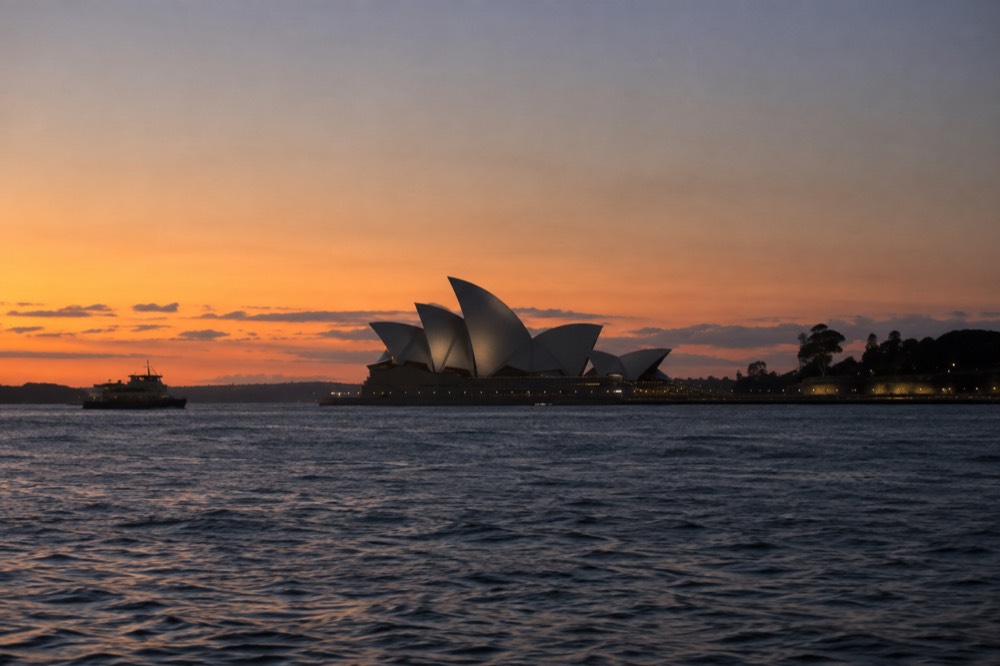
Beauty contests between cities are mostly a matter of taste, but Australia's version has a clear front-runner. Sydney's harbour setting, a drowned river valley ringed by sandstone headlands, gives it a natural stage no other Australian capital can match. Melbourne has laneways and grand Victorian streetscapes, Hobart has a mountain backdrop and Adelaide has its parkland belt, yet the postcard vote keeps landing on Sydney.
What's the Prettiest City in Australia?
Sydney is the prettiest city in Australia for most travellers, and the reason is geography rather than architecture. Its harbour, beaches and sandstone headlands form a setting that no other Australian capital replicates. Melbourne runs a close and very different second on the strength of its laneways, gardens and heritage streetscapes. Hobart, with kunanyi/Mount Wellington behind it, is the dark horse for visitors who prefer wild scenery to urban polish.
That answer comes with a caveat worth stating plainly: prettiness depends on what you photograph. Sydney wins the wide landscape shot. Melbourne wins the intimate street-level frame, the bluestone lane with a coffee queue and a mural. If your idea of a beautiful city is a skyline you can see from the water, Sydney is unmatched in this country. If it is texture and detail at walking pace, the argument for Melbourne gets serious.
The comparison also depends on season. Sydney in a February downpour, under the cloudiest skies of its year, looks and feels different from Sydney in August, which the long-term record shows is its clearest month. Anyone judging the two cities on a single visit is judging two weather samples as much as two cities.
Why Sydney Usually Takes the Title
Sydney's claim rests on a harbour that is a working landscape, not just a view. The Opera House, the Harbour Bridge, headlands such as Bradley's Head and beach suburbs from Bondi to Manly sit inside one continuous frame of water and sandstone. Very few cities anywhere combine a natural harbour of this shape with beaches on the ocean side of the same peninsula system. Melbourne, by contrast, sits on a flat river plain at the top of a large bay, and its beauty is built rather than given.
The harbour is the asset that keeps paying. A visitor standing at Circular Quay can see the Opera House, the bridge, ferries crossing to Manly and Taronga Zoo, all within a few hundred metres of walking. The same vantage points work at sunrise, at midday and at night, which is unusual; many beautiful cities have one good light and several flat ones.
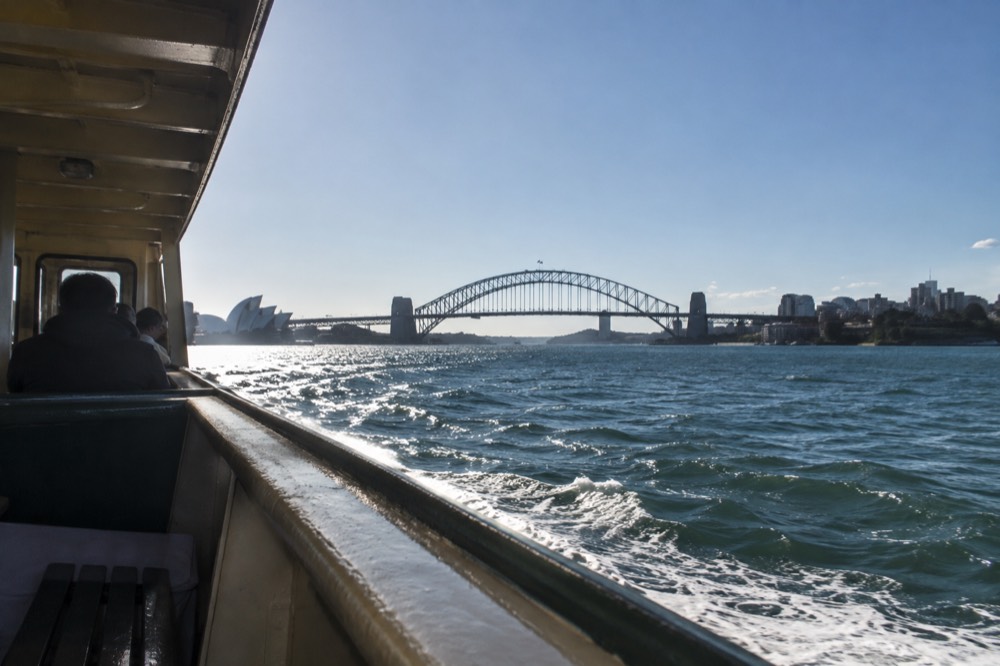
The best way to read the harbour is from the water, and the Sydney Harbour sightseeing cruise is the straightforward way to do it, with morning and afternoon departures from Circular Quay.
From the deck you get the sequence the shore never shows in one glance: the Opera House from the east, the bridge from the west, and the headlands of the northern shore closing the frame. The Rocks sits on the western side of Circular Quay, and a guided walking tour of The Rocks adds the colonial-era sandstone layer to what the water view gives you. The Sydney Travel Guide covers both precincts in depth if you want to build a full day around them.
The beaches complete the argument. Sydney is the only major Australian city where a world-famous surf beach sits about eight kilometres from the central business district, reachable by bus. Manly adds a second beach town with a ferry ride attached, which doubles as one of the best-value harbour cruises in the country. Our Bondi Beach guide and the guide to Manly cover both in detail.
What Makes Melbourne's Beauty Different
Melbourne is prettier at street level than Sydney, and many photographers and residents argue it wins on that basis alone. Its gold-rush-era architecture, arcades, wide tree-lined boulevards and a dense grid of laneways give it interior beauty that Sydney, with its glass towers and harbour-facing apartments, largely lacks. Melbourne also has a more consistent urban fabric; Sydney's city centre is more fragmented. The honest verdict is that Melbourne is a prettier city to walk inside, and Sydney is a prettier city to look at.
The laneway network is the core of the case. Hosier Lane and its neighbours deliver concentrated street art, bars and café doorways in a way Sydney's CBD simply does not attempt. The Royal Arcade and Block Arcade are 19th-century shopping passages of a kind Sydney demolished most of. Fitzroy, Carlton and St Kilda each hold a distinct streetscape, and the Royal Botanic Gardens in Melbourne's South Yarra are a serious piece of landscape design.
The skyline argument goes the other way. Melbourne's Southbank and Docklands towers are handsome in places but generic; Sydney's skyline is anchored by two structures, the Opera House and the Harbour Bridge, that are among the most photographed buildings on earth. That anchor is why Sydney keeps winning the postcard count even among people who prefer Melbourne's street life.
If you want to see Sydney's skyline as a composition rather than from inside it, the Sydney Tower Eye observation deck gives you the full harbour-to-Blue-Mountains horizon in one rotation.
The two cities also photograph differently in different weather. Melbourne's overcast skies, common in winter, flatter its bluestone and Victorian brickwork. Sydney's sandstone and water want the clear winter light, which the climate record says arrives most reliably in the middle of the year.
How Sydney's Climate Shapes the Scenery
Sydney's scenery is built for clear-sky viewing, and the long-term climate record shows its clearest month is August, with an average of 13.4 clear days, while February, in the middle of summer, is its cloudiest at 5.3. June is its wettest month on average, with 133.1 mm of rain, wetter than any summer month. That inverts what most visitors expect from an Australian city and it means the prettiest light of the year arrives in late winter, not in peak season.
These are long-run averages from the Bureau of Meteorology's station record for Sydney, not a forecast for any particular trip. But they reshape when to visit if photography is the goal. A traveller who arrives in February, statistically Sydney's cloudiest month, may see a flat grey harbour; the same traveller in August gets the sharpest light of the year. The Bureau of Meteorology publishes the full climate averages for Sydney if you want the whole table.
| Month | Mean max °C | Mean rainfall mm | Mean clear days |
|---|---|---|---|
| January | 26.0 | 101.2 | 6.8 |
| February | 25.8 | 119.3 | 5.3 |
| June | 17.0 | 133.1 | 9.1 |
| July | 16.4 | 96.3 | 12.0 |
| August | 17.9 | 80.2 | 13.4 |
| December | 25.3 | 77.1 | 6.6 |
The practical takeaway for a prettiest-city trip: if you are chasing the definitive harbour photograph, the August window is the strongest bet, and the best time to visit Sydney guide breaks the whole year down month by month.
Which Other Cities Deserve a Mention
Hobart is the strongest challenger outside the big two, pairing a deep-water harbour with kunanyi/Mount Wellington rising directly behind the city. Adelaide earns its place on a planned parkland belt and the Adelaide Hills at its doorstep, and Brisbane's river bends and new cliff-side walks give it a case that strengthens every year. Perth, with the Swan River and Kings Park above the CBD, is the west coast's entry. None of them, though, matches Sydney's combination of harbour, beaches and architectural anchors in one setting.
Hobart's appeal is scale. Salamanca Place's sandstone warehouses and the mountain behind them compress wild and urban into one view, and the Mona museum adds a contemporary edge. It is a small city, closer in size to a regional centre than to a capital, which is exactly why its scenery feels unmediated.
Adelaide's beauty is the most designed of the group: the surveyor's plan ringed the city with parklands, and that belt still reads clearly from the air and on foot. Brisbane's subtropical greenery, jacarandas in November and the CityCat river rides, give it a lushness the southern cities lack. Perth's Kings Park is one of the largest inner-city parks in the world and looks straight down the Swan River to the skyline.
| City | Signature beauty | Best vantage | Strongest season |
|---|---|---|---|
| Sydney | Harbour, Opera House, bridge, beaches | Harbour water or Mrs Macquarie's Point | Late winter for clear skies |
| Melbourne | Laneways, arcades, Victorian streetscapes | Hosier Lane or the Royal Botanic Gardens | Autumn for foliage and soft light |
| Hobart | Harbour with mountain backdrop | Battery Point or kunanyi summit | Summer for long clear evenings |
| Adelaide | Parkland belt and Adelaide Hills | Montefiore Hill or the Hills themselves | Spring |
| Perth | Swan River and Kings Park | Kings Park lookout | Spring wildflower season |
So Which Should You Visit for Pure Beauty?
Visit Sydney if beauty means a natural setting with world-famous structures inside it, and Melbourne if beauty means streetscapes you want to walk through slowly. Sydney is the answer as most people ask it, because the harbour gives it a setting the other capitals cannot copy. The two cities reward different eyes, and a trip taking in both, three hours apart by train or plane, settles it best. Get on the water in Sydney and into the laneways in Melbourne.
For the Sydney half of that trip, the harbour cruise is the one booking that directly serves the question. The morning and afternoon sightseeing cruise from Circular Quay is short enough to fit any itinerary and puts the Opera House, the bridge and the headlands in the same frame, which is the frame this whole argument rests on. Pair it with a walk through The Rocks on the same day and you have seen both halves of Sydney's beauty, the given and the built, in about six hours.
If you are weighing the two big cities for a full trip rather than a beauty verdict, the Sydney versus Melbourne guide compares them on food, transport, cost and nightlife, and the question of whether Sydney is worth visiting covers the case for the harbour city in detail.
Common Questions About the Prettiest City in Australia
What's the prettiest city in Australia?
Sydney, for most travellers. Its harbour, beaches and sandstone headlands give it a natural setting that no other Australian capital matches, anchored by the Opera House and the Harbour Bridge. Melbourne is the strong alternative for people who prefer street-level beauty, laneways and heritage architecture, and Hobart is the best small-city answer.
Is Sydney or Melbourne more beautiful?
Sydney is more beautiful from a distance and Melbourne is more beautiful up close. Sydney's harbour and skyline win the wide shot; Melbourne's laneways, arcades and Victorian streetscapes win the walking frame. Photographers chasing a landscape choose Sydney, and photographers chasing texture often choose Melbourne.
What is the best month to photograph Sydney?
August, on the long-term climate record. It is Sydney's clearest month on average, with 13.4 clear days, while February, in mid-summer, is its cloudiest. June is the wettest month of the year on average, wetter than any summer month, which surprises most visitors.
Is Hobart prettier than Sydney?
Hobart is more dramatic for its size, with kunanyi/Mount Wellington directly behind a sandstone harbour city. But it is a small city with a fraction of Sydney's range. Hobart rewards a visitor who wants wild scenery close to a compact centre; Sydney rewards one who wants harbour, beaches and landmark architecture in a single day.
What is the cheapest way to see Sydney's harbour beauty?
The public ferry. A Manly ferry ride on an Opal card costs the same standard ferry fare as any other Sydney Ferries trip and delivers the same harbour views the sightseeing cruises sell. The cruises add commentary and a dedicated loop, but the ferry is the budget option and it is genuinely scenic.