What Are Some Secret Walks in Sydney?
Quiet harbourside paths, hidden stairways and overlooked streets: the Sydney walks that sit just off the tourist trail, with what each one is like and when to go.
Sydney's headline walks, the Bondi to Coogee coastal path and the ferry-side promenade at Manly, absorb almost all of the city's walking traffic. The routes below carry a fraction of those numbers while showing a side of the city most visitors never see: a garden hidden below a North Shore railway station, a harbour cove loop with a small ocean pool, and laneways in the inner west where the architecture does the talking. Some sit ten minutes from Circular Quay.
What Are Some Secret Walks in Sydney?
The best under-the-radar walks in Sydney are Wendy's Secret Garden at Lavender Bay, the Cremorne Point loop on the North Shore, the Glebe foreshore walk in the inner west, and the sandstone lanes of The Rocks beyond the main strip. Each is free, none needs a booking, and every one sits within easy reach of public transport. This guide walks through what each route is like, when to go, and which ones suit a short visit.
"Walking in Sydney" usually means one of three things: the coastal path from Bondi, the Spit to Manly walk, or the promenade around the Royal Botanic Garden. All three deserve their reputations. But the city is built around a drowned river valley, and that geography leaves pockets of quiet path all over the harbour where the topography was too steep or too awkward for anything but a track.
The walks below are chosen for one shared quality: they are genuinely obscure to visitors while being ordinary, everyday places for the people who live around them. That is the honest definition of a "secret walk" in a city of this size. Nothing here is fenced off, ticketed or gated.
A quick comparison before the detail:
| Walk | Area | Character | Time needed |
|---|---|---|---|
| Wendy's Secret Garden | Lavender Bay, North Shore | Planted garden on a harbour ledge | 30-45 minutes |
| Cremorne Point loop | Cremorne, North Shore | Harbour coves and a small ocean pool | 45-60 minutes |
| Glebe foreshore walk | Glebe, inner west | Waterfront parkland and laneways | 60-90 minutes |
| The Rocks back lanes | The Rocks, city | Sandstone alleys and hidden courtyards | 45-60 minutes |
Which Harbourside Walks Do Locals Keep to Themselves?
Two harbour walks top the list: Wendy's Secret Garden at Lavender Bay, reached by a stairway beside McMahons Point, and the Cremorne Point loop, a circuit of a harbour peninsula with a small historic swimming pool halfway around. Both sit on the North Shore, both are free, and both are a short ferry or train ride from the city. The garden is the quieter of the two on weekdays.
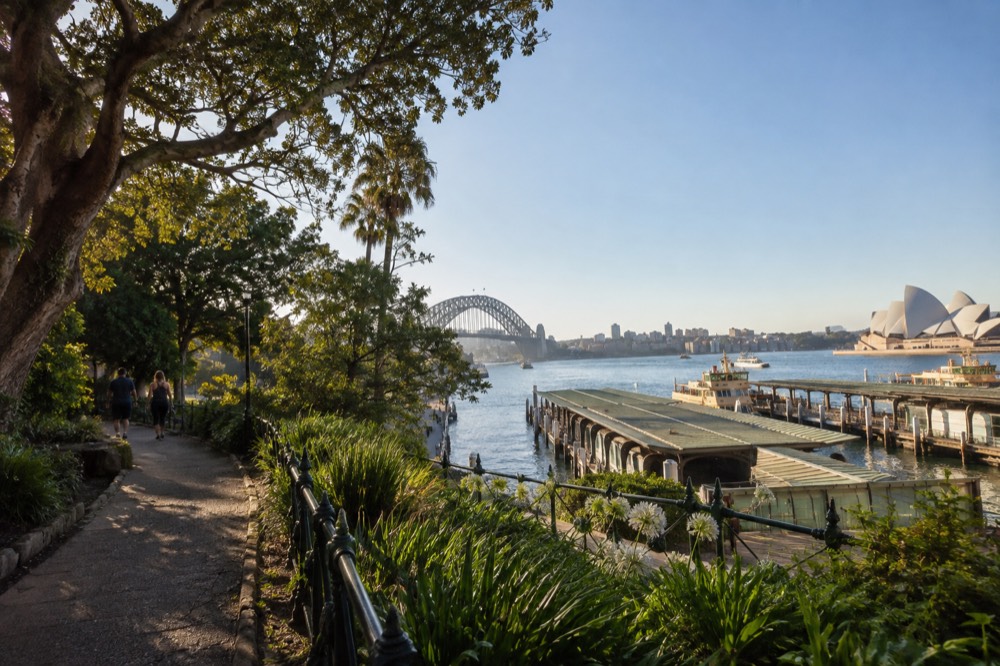
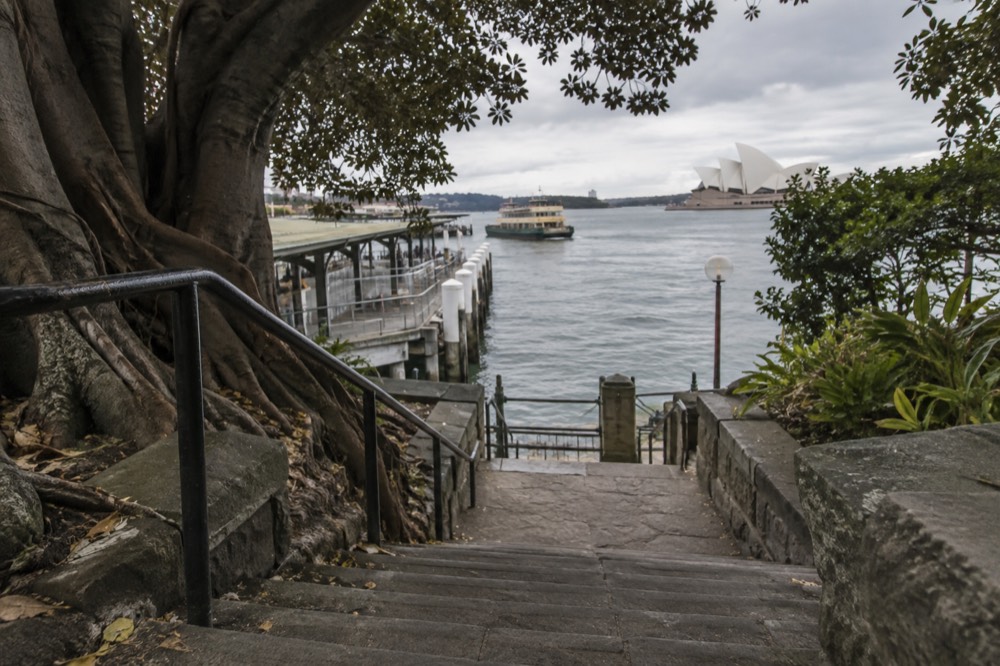
Wendy's Secret Garden is the closest thing Sydney has to a genuine hidden garden. It sits below the heritage-listed home of the late artist Brett Whiteley, on a sandstone ledge looking directly across the water at the Opera House, and it is reached through an unmarked-looking entrance off a residential street at Lavender Bay. The planting is dense and informal, the paths are narrow, and the view arrives in pieces through the trees rather than all at once. The whole space takes less than half an hour to wander, which is exactly why it works: it is a pause, not a hike.
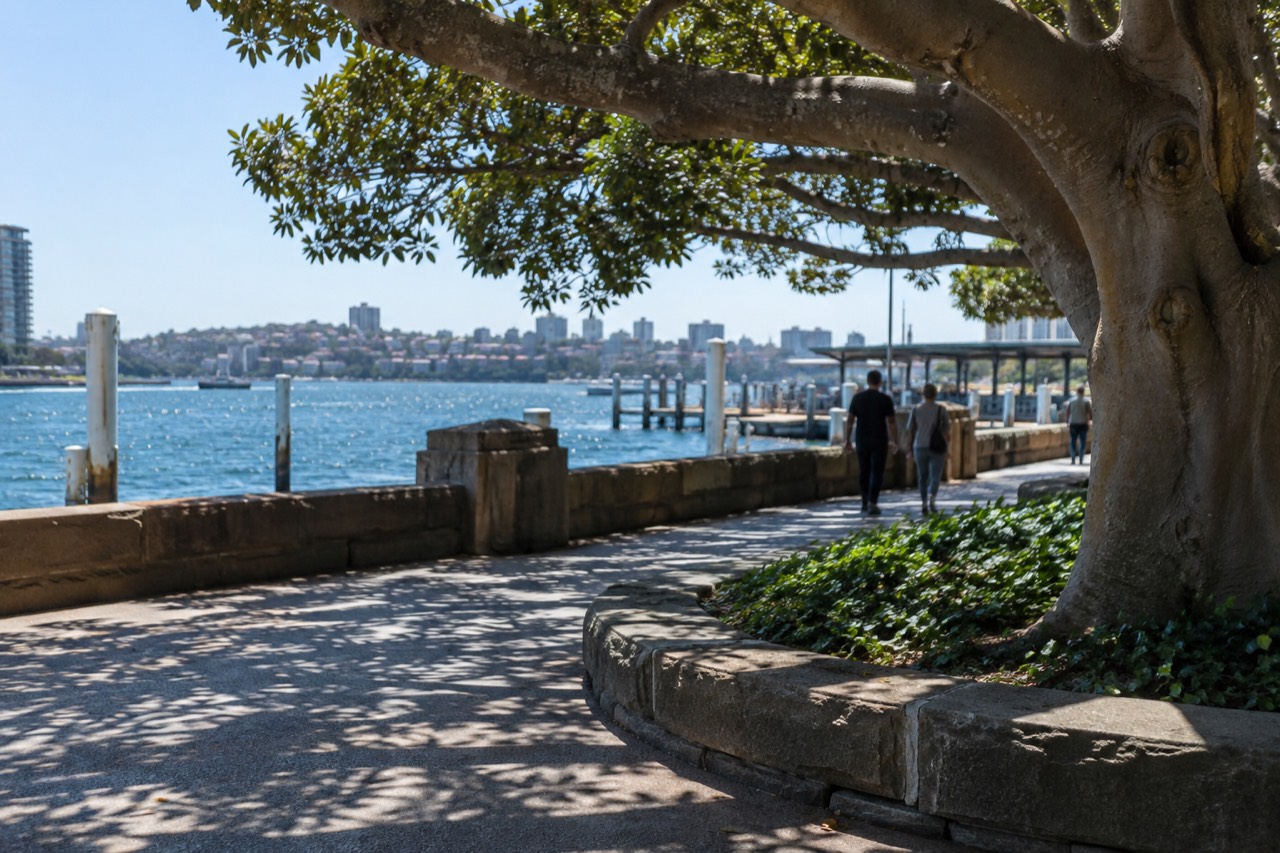
The Cremorne Point loop is a different animal. The track circles the entire point, passing through stands of mature fig trees, past a small free swimming pool built into the rocks, and along a stretch of harbour shoreline where the ferries pass close enough to hear the engines. There is almost no elevation, the surface is good underfoot, and the circuit can be walked in under an hour. To get there, take a ferry to Cremorne Point wharf and simply keep the water on one side.
Both routes are covered in more depth in the site's guide to Sydney's best lookouts and quiet corners, and the ferry ride out is half the experience in itself. Transport for NSW publishes the full ferry network and fare details, and a contactless card is charged the same as an Opal card, so there is nothing to buy in advance. See the official fare pages at transportnsw.info for current caps and route information.
If you would rather have a local point out the details, these walks pair well with a guided option in the same spirit:
Where Are the Quiet Bushwalks Close to the City?
The quietest bushwalking within Sydney's suburbs is inside its national parks: the harbour-side tracks of Sydney Harbour National Park at Bradleys Head and Middle Head, and the larger network in Garigal and Lane Cove. Entry on foot is free at almost all of them, since vehicle fees apply only where a car must be brought in. NSW National Parks publishes alerts for track closures before every visit.
Sydney is unusual among big cities in having sandstone bushland inside the suburbs, not an hour outside them. Bradleys Head, a short walk from Taronga Zoo's ferry wharf, has a track that runs along the headland through angophora trees with the harbour on one side the whole way. It is quiet, shaded, and gives a view of the Opera House that almost nobody photographs because almost nobody is standing there.
Further north, Middle Head's fortifications sit among walking tracks with grassed gun emplacements and harbour outlooks, and the whole area can be walked without seeing a tour group. The NSW National Parks service manages these sites and publishes current access alerts, including any track works, on its official parks pages. Check those before you go, since maintenance closures are common and are always listed there first.
For a walk with a story attached rather than solitude, the oldest part of the city rewards a guide:
Which Inner-west Streets and Paths Are Worth Walking?
The inner west's best walking is in Glebe and Newtown. Glebe offers a foreshore park walk along Blackwattle Bay ending at the new Sydney Fish Market precinct, while Newtown's King Street and its back lanes deliver the city's densest stretch of Victorian streetscapes and street art. Both are on the light rail or a short bus ride from the centre, and neither costs anything to explore.
The Glebe foreshore walk runs from Bicentennial Park along Blackwattle Bay to the fish market, passing parks, an old timber-truss bridge and some of the best weekend markets in the city along the way. It is flat, partly shaded, and has the working-waterfront character the harbour's northern side lost decades ago: rowing crews, moored yachts and the Anzac Bridge overhead. Since the new Sydney Fish Market building opened at Blackwattle Bay, the walk now has a natural destination at its end, and a ferry route now serves the area too.
Newtown is a street walk rather than a path, and it is best taken slowly. King Street itself is the spine, but the point of the walk is turning off it: Enmore Road's shopfronts, the terraces of the side streets, and a concentration of murals and paste-ups that changes month to month. The suburb's architecture is largely late-Victorian terrace housing, and because the area escaped the demolitions that reshaped the city centre, the streetscapes survive in long, unbroken runs. Give it ninety minutes and stop for coffee; the suburb takes its cafes seriously.
Do You Need a Guide for Sydney's Hidden Walks?
No, every walk in this article is free and self-guided. A guide adds value in one place: The Rocks, where the hidden part is not the route but the history layered inside it. A ninety-minute guided walk there points out courtyards, stairways and building details that a self-guided walker passes without ever registering, and it costs about the same as a lunch.
The Rocks is the one entry on this list where the "secret" is genuinely invisible rather than merely out of the way. The neighbourhood's lanes, the Suez Canal-style cuts between buildings, the Argyle Cut itself, all sit in plain sight of the tourists at Circular Quay, and almost all of it reads as background unless someone explains what you are looking at. The Rocks Guided Walking Tour covers the ground in an hour and a half with a guide who does exactly that, and it is the rare tour where the guide, not the scenery, is the product.
For visitors with more time, the same logic extends outward. A Blue Mountains day trip with a local guide reaches walking country that is anything but secret in name but is quietly missed by most visitors, who see the lookouts and never the valleys between them.
When Is the Best Time to Walk These Routes?
Early morning on a weekday is the quietest window for every walk here, and the long-run climate data favours the shoulder months. August is Sydney's clearest month on average, with 13.4 mean clear days, while June is its wettest, with 133.1 mm of rain on the long-run averages. In summer, December through February, walk before 10am: the UV index regularly reaches extreme levels of 11 or higher.
The Bureau of Meteorology's long-term averages for Sydney also carry a fact that surprises most visitors: February, the heart of peak season, is the city's cloudiest month on the record, with just 5.3 mean clear days, while the middle of winter delivers the clearest skies of the year. A winter visit is therefore a better walking visit than the brochures suggest, provided you start later in the morning, since June also averages the fewest daily sunshine hours at 5.5.
Two practical notes apply year-round. First, Sydney observes daylight saving from the first Sunday in October to the first Sunday in April, so an "early evening" walk in January happens in full light and in April does not. Second, if any of these routes take you near the coast rather than the harbour, the standing advice from Surf Life Saving applies: swim only between the red and yellow flags at a patrolled beach, and patrol seasons and hours vary by beach, so check before you plan a swim into a walk. The official rip-current and flags guidance is published at beachsafe.org.au.
Planning Your Walking Days
The simplest way to plan is to pair one famous walk with one quiet one on each day of your stay. A morning at the Opera House and Circular Quay ends naturally at the ferry to Cremorne Point, an afternoon in Glebe can finish with dinner at the fish market, and any day built around The Rocks can absorb its back lanes in under an hour. None of these routes needs a booking, so the whole plan can be reshaped on the day around the weather.
Sydney rewards walkers who mix one famous route with one quiet one, and the pairings are easy. A morning at the Opera House and Circular Quay ends naturally at the ferry to Cremorne Point; an afternoon in Glebe can be walked off with dinner at the fish market. The full picture of how the city fits together, including which areas suit which kind of visitor, is laid out in the site's Sydney for first-timers guide, and the seasonal detail is in the best time to visit Sydney guide. This Sydney Travel Guide page you are reading is part of that same coverage.
For a single-day plan built around walking, the one day in Sydney itinerary sequences the harbour, the Rocks and a ferry without doubling back, and it leaves room to swap one of the headline stops for a quieter route from this list.
If a guided day suits you better than planning, these are the three options that pair most naturally with the walks above:
Common Questions About Secret Walks in Sydney
What are some secret walks in Sydney?
Wendy's Secret Garden at Lavender Bay, the Cremorne Point loop, the Glebe foreshore walk and the back lanes of The Rocks are the best under-the-radar routes. All are free, none require booking, and each sits within a short ferry, train or bus ride of the city centre.
Are these walks free?
Yes. Every walk listed here is free to enter. The only walking-related costs are transport fares and, if you choose one, a guided tour. National park vehicle fees do not apply to anyone arriving on foot or by ferry.
Which secret walk is closest to the city centre?
The Rocks' back lanes are a five-minute walk from Circular Quay. Wendy's Secret Garden is one ferry stop away at McMahons Point or a short walk from North Sydney station, making it the closest genuinely hidden route to the harbour's north side.
Are the secret walks in Sydney suitable for beginners?
Yes. The Cremorne Point loop and the Glebe foreshore walk are flat with good surfaces. Wendy's Secret Garden involves some stairs, and The Rocks lanes include stepped alleys, so anyone comfortable with typical city stairways will manage all four without difficulty.
What is the best time of year for walking in Sydney?
The shoulder months suit walkers best. August is the city's clearest month on the long-run averages, and June its wettest, so late winter and spring deliver the most reliable walking weather. In summer, start before 10am because the UV index regularly reaches extreme levels.
Do I need a guide for any of these walks?
No, all of them work self-guided. The one place a guide genuinely adds something is The Rocks, where the interest lies in the history behind the lanes rather than the lanes themselves, and a ninety-minute guided walk brings that history out.