Is the Blue Mountains Day Trip Worth It?
An honest assessment of the Blue Mountains day trip from Sydney: what you see, what it costs, train versus tour, and the traps that catch visitors.
Is the Blue Mountains Day Trip Worth It?
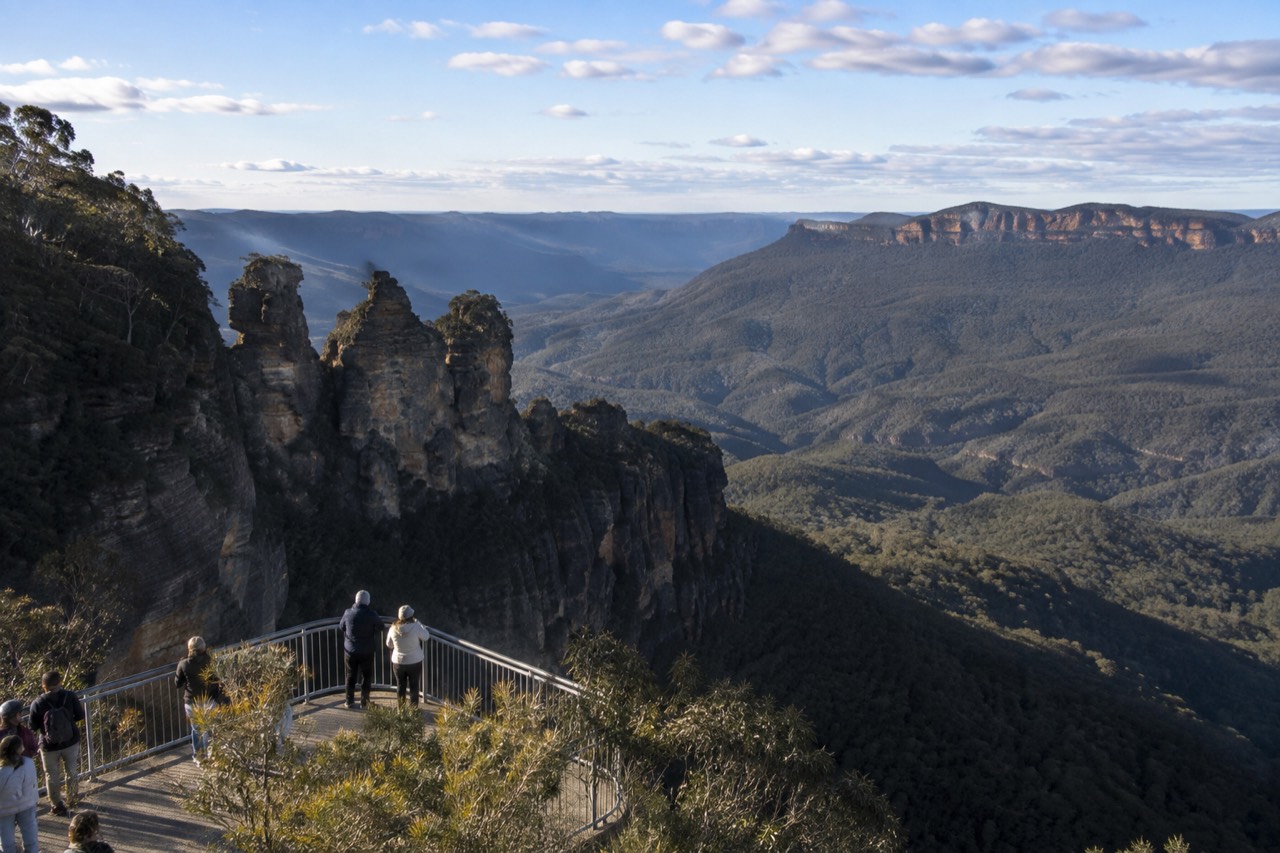
Yes, for most visitors the Blue Mountains day trip is worth it, and it is one of the few Sydney side trips that genuinely delivers. The national park sits west of the city on the upper Blue Mountains plateau, the train from Central reaches Katoomba in roughly two hours, and entry to the national park is free at Katoomba. You get sandstone cliffs, eucalyptus forest and the Three Sisters without renting a car, which is rare for an Australian wilderness area.
The honest qualification is that the experience swings wildly with two things you control and one you do not. The things you control are how you get there and how long you stay; a rushed half-day loop of Katoomba is a different product from a full day with a walk in it. The thing you do not control is the weather, because the valley is famous for filling with cloud that erases the view entirely. Some visitors stand at Echo Point on a white morning and see nothing but fog.
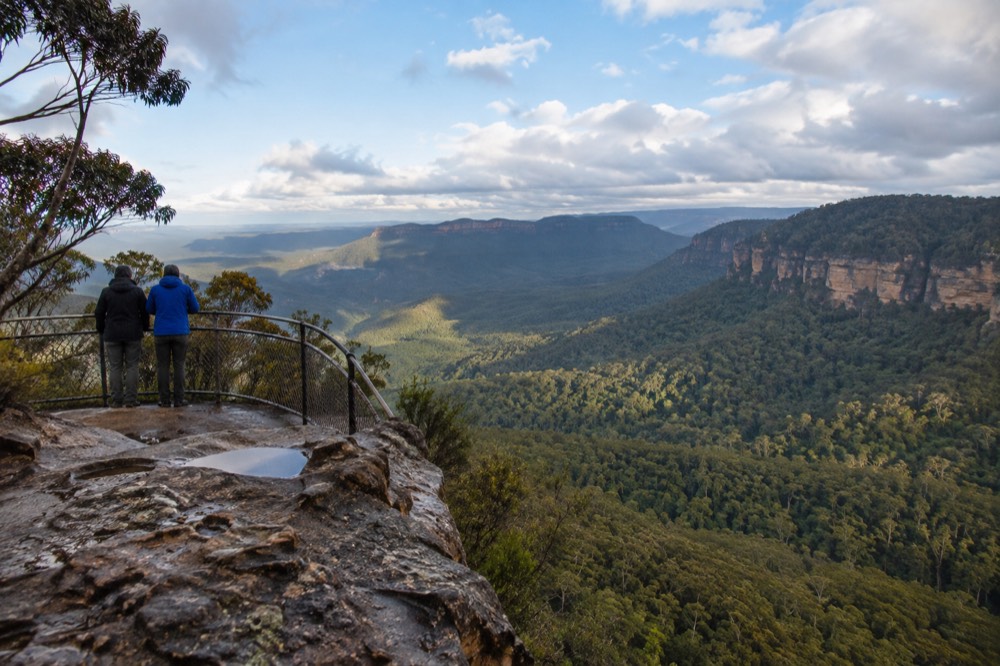
This site's full Blue Mountains day trip from Sydney guide covers the practical planning in depth. This page answers the narrower question: whether the day trip justifies its long day, and for whom it does not. The short version is that independent travellers with a full day to spend, and visitors who would rather not manage regional trains and buses, both walk away happy. The visitor who will not is the one squeezing it between a late breakfast and an evening flight.
What Do You Actually See in a Single Day?
A good single day covers the Three Sisters at Katoomba, at least one clifftop lookout, and one short walk, plus either Scenic World's rides or the lookouts at a second village such as Leura. The Three Sisters formation above the Jamison Valley is the icon, but the real draw is the scale of the valley itself: a sandstone gorge with blue-hazed forest running to the horizon. A day trip is enough to see it properly, not enough to walk to the valley floor and back comfortably.
The standard rhythm is a morning at Echo Point, a midday descent into the valley either on foot via the Giant Stairway or by Scenic World's Railway, and an afternoon at a quieter vantage point. Govetts Leap at Blackheath is the view many locals rate above Echo Point, and it is a short drive or an infrequent bus from Katoomba. Leura's tree-lined main street is where most day trips stop for lunch, and it earns the stop.
What a single day cannot do is the long walks. The Grand Canyon Track, the National Pass and the valley-floor trails under the Three Sisters each want three to five hours on their own. If walking is the reason you are going, a day trip still works, but you should pick one walk and sacrifice the rest rather than sampling everything. Our Katoomba and the Three Sisters page breaks down the village-level choices.
The other thing a day trip cannot do is sunset and sunrise, which are when the valley is at its best. That is an argument for overnighting in Katoomba or Blackheath, not for skipping the mountains, but it is a real limit of the format.
How Much Does a Blue Mountains Day Trip Cost?
A self-guided day trip by train costs very little beyond the fare: national park entry is free at Katoomba, the lookouts are free, and the main optional spend is Scenic World, which is separately ticketed with dynamic pricing. The train fare from Central falls in Transport for NSW's longest distance band, so off-peak travel is the cheaper play. A guided day tour costs more but bundles transport, the guide and usually Scenic World entry into one price.
Here is the honest cost picture for the two main approaches:
| Cost item | Self-guided by train | Organised day tour |
|---|---|---|
| Transport | Train fare from Central, off-peak discount applies on weekends | Coach from central Sydney hotels, included |
| National park entry | Free at Katoomba; $8 per vehicle only in the Glenbrook area | Included in the tour price |
| Lookouts and walks | Free | Included, guided |
| Scenic World | Optional, separately ticketed, dynamic pricing | Often included; check the inclusions list |
| Lunch | Buy in Leura or Katoomba | Often included on all-inclusive options |
| Time cost | Roughly 13 hours door to door if done properly | Around 10 to 11 hours, fixed schedule |
The park entry point surprises people: the Blue Mountains National Park charges a vehicle fee only in the Glenbrook area near the park's eastern edge, per the National Parks fee schedule. Arriving by train at Katoomba, or driving to Blackheath or Wentworth Falls, costs nothing in park fees. Scenic World is a private operator inside the town of Katoomba and is not part of the national park, which is why it carries its own ticket; our Scenic World Blue Mountains page explains what the ticket includes.
The train fare itself is set by distance bands published on the Transport for NSW fares page, and Katoomba sits in the longest band, so the off-peak discount on weekends and public holidays is worth having. Note that Opal daily caps still apply, which can make the Blue Mountains train effectively cheap on a Friday or weekend if you have already been using transport that day.
If the trade-off above reads like work, that is the case for the tour option, and it is a fair one.
Is a Guided Tour Better Than the Train?
A guided tour is better if you value commentary, a fixed schedule and not thinking about bus timetables; the train is better if you want to set your own pace, spend longer at one lookout or keep the budget tight. The tour also solves the valley's real logistical problem, which is that the best lookouts are scattered across several villages linked by infrequent buses. Neither choice is wrong, and the same day can be excellent either way.
The strongest argument for a tour is the guide. The Blue Mountains rewards explanation: the blue haze is a real optical effect of eucalyptus oil droplets scattering light, the sandstone layering tells a 200-million-year story, and the Aboriginal and colonial history of the crossings is easy to walk past without knowing it. A guide turns a view into a story, and on a 10-hour day that difference compounds. The rest of the planning pages sit on Sydney Travel Guide.
The strongest argument for the train is flexibility. If cloud fills the valley at 10am, an independent traveller can wait an hour for it to lift; a coach moves on schedule. Independent travellers can also bail early, which matters if the day turns wet.
The all-inclusive option most travellers compare against the DIY day is the Blue Mountains Best All Inclusive day trip, which runs about ten hours with a local guide and bundles the headline sights into one organised itinerary.
It suits the visitor who has one free day, does not want to spend it reading a bus timetable, and would rather the Scenic World question be answered in advance than solved at the gate. Reviews for the operator's listing are strong and the volume is high, which for a day trip of this kind is the main quality signal available.
When Should You Go, and What Is the Weather Doing?
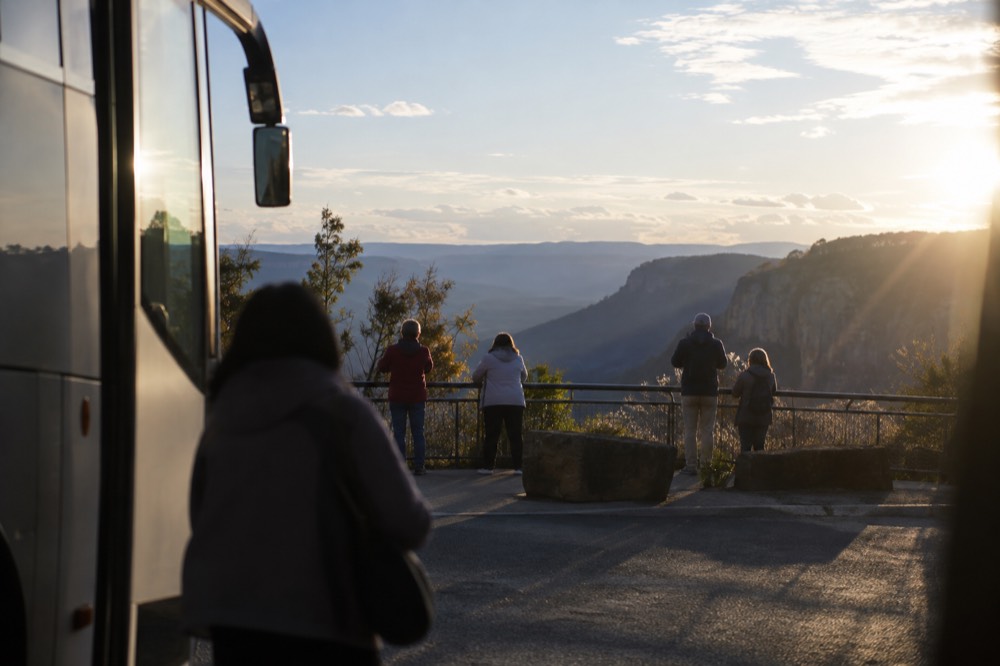
Go on a weekday in spring or autumn if you can, and go early in the day regardless. The mountains sit high on the plateau above Sydney, so they run noticeably cooler than the city at every time of year, and winter mornings can sit close to zero at Katoomba. The one weather event that genuinely ruins the trip is valley cloud, which is most common after rain and in the early morning, so check a Katoomba-specific forecast, not Sydney's.
Summer is the season of clear valley views but also of heat on exposed cliff paths and the biggest weekend crowds. Winter is the opposite: cold, quiet, and prone to fog, but with the clearest air when the fog lifts. Spring and autumn split the difference and carry the best odds of a comfortable walking temperature with a visible valley.
Two Sydney-side weather facts matter for planning. June is Sydney's wettest month on the long-run record, wetter than any summer month, and the mountains tend to share that pattern, so early-winter trips carry the highest cloud risk. And daylight is a real constraint outside summer: in midwinter the sun sets before 5pm in the mountains, so a day trip that leaves Sydney at 10am arrives with the useful light already half spent. The 8am-ish departures, whether train or tour, exist for this reason.
What Could Spoil the Trip?
Three things: track and road closures, valley cloud, and weekend crowds. The Blue Mountains has had multiple closures running into late 2026, including Jenolan Karst Conservation Reserve closed to 31 December and Mount Hay Road closed for upgrades, so check the National Parks alerts before you commit. Cloud can erase the Three Sisters entirely. And weekend crowds at Echo Point are heavy enough to change the feel of the place.
The closures point matters most for anyone adding Jenolan Caves to the day. The caves are a common "add-on" in older itineraries, but the reserve has been closed through 2026, and a day trip built around them is currently a day trip to a locked gate. Katoomba, Blackheath and Leura are unaffected, which is one reason the standard day trip shape has not changed.
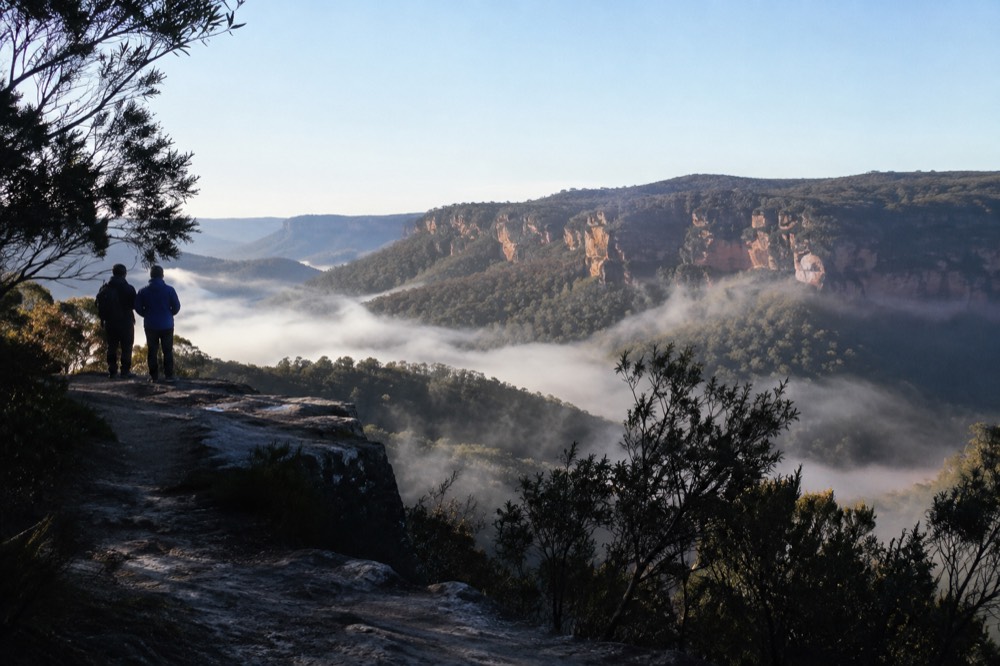
Cloud is the risk no operator can fix. The valley is deep enough that orographic cloud sits in it regularly, particularly between May and August. The practical defence is to build slack into the day: a lookout you can revisit, or a walk that is worthwhile even without the long view. The forest itself does not stop being beautiful in fog.
Crowds are a timing problem with a timing solution. Echo Point before 9am on a weekday is a different place from Echo Point at midday on a Saturday. If your only free day is a weekend, go early and do the lookouts first, then let the crowds have the midday while you walk.
Common Questions About the Blue Mountains Day Trip
Is the Blue Mountains day trip worth it?
Yes, for most visitors. It is one of the few Australian wilderness areas reachable from a major city by train in about two hours, park entry at Katoomba is free, and a full day is enough to see the Three Sisters, a clifftop lookout and either Scenic World or a short walk. It is not worth it for anyone with less than a full day to spend.
Can you do the Blue Mountains in half a day?
You can see Katoomba and the Three Sisters in half a day, but it is a compressed version of the trip with no walk in it and no buffer for cloud. Travellers weighing a half-day version should read the dedicated half-day Blue Mountains question before deciding.
Do you need a car for the Blue Mountains?
No. The train from Central to Katoomba takes about two hours and the village, Echo Point and Scenic World are all walkable or linked by local bus. A car helps only for the scattered lookouts such as Govetts Leap, and even those are reachable with planning.
Is Scenic World worth adding to the day?
Scenic World suits families and anyone who wants to reach the valley floor without climbing the Giant Stairway. It is a private, separately ticketed attraction with dynamic pricing, so treat it as an optional add-on rather than the point of the trip. The free lookouts carry the views.
What is the best month to visit the Blue Mountains?
October to November and March to April offer the best balance of comfortable walking weather, reasonable daylight and thinner crowds. Avoid building the trip around June, which is the wettest month in the long-run Sydney record, and check for cloud on the morning itself.